Do you KNOW what is coming in 2012?

Respected All,

Today, First Aid to Save a Life (FATSAL) Pakistan is honored and satisfied with what they have achieved in year 2011. FATSAL has decided to move to other key cities of Pakistan, to serve local communities and will move in first quarter of 2012 to Multan & Karachi.

Multan is the capital of Multan District. It is located in the southern part of the province, Punjab. The city has grown to become an influential political and economical center for the country, with a dry port and excellent transport links. Multan is famous for its crops: wheat, cotton and sugar cane as well as mangoes, citrus and guavas.

Multan is a commercial and industrial center, as it is connected with the rest of the country through rail and air including the other industrial hubs such as Lahore, Karachi, Gujranwala, Quetta and Faisalabad. Industries include fertilizer, cosmetics, glass manufacturing, cotton production and processing, large textile units, flour mills, sugar and oil mills and large-scale power generation projects. It is famous for its handicrafts (carpets & ceramics) and cottage industries.

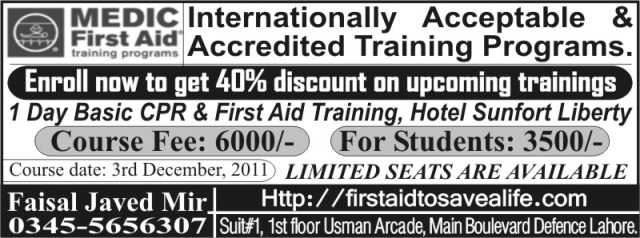
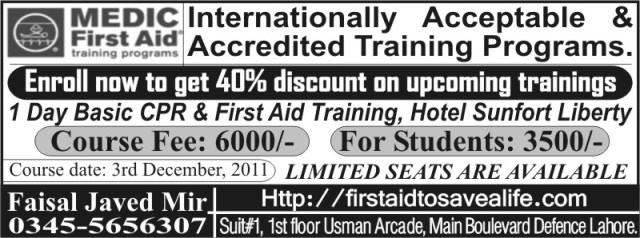
March 17, 2012 Basic CPR & First Aid Multan =10,500/- Register Here

Karachi is the largest city, main seaport and the main financial center of Pakistan, as well as the capital of the province of Sindh. It is Pakistan’s premier centre of banking, industry, economic activity and trade and is home to Pakistan’s largest corporations, including those involved in textiles, shipping, automotive industry, entertainment, the arts, fashion, advertising, publishing, software development and medical research.

February 29, 2012 Basic CPR & First Aid Karachi =12,500/- Register Here

First Aid to Save a Life Pakistan will do best to increase the frequency of courses in Karachi and will try the same for Multan.

To Your & Nation’s Health and Safety,

Faisal Javed Mir & First Aid to Save a Life Pakistan

Did you like the post? Let’s get connected on FacebookLinkedInTwitter & YouTube.

You might also like:

Posted in First Aid Training Programs, Industrial News, Why choose First Aid to Save a Life | Tagged , , , , , , , , , , , , , , , , , , , , , , , , , , , , , , , , , , , , , | 1 Comment

Best Articles by FATSAL from 2011 Part1

As-Salam-o-Alaikum Respected Subscribers & Readers,

First of all we would like to thank our subscribers and regular followers for their support and liking. First Aid to Save a Life Pakistan will always try their best to write meaningful, inspirational, knowledge base, our observations, updates to local or global events and insights on regulatory requirements and industrial first aid and emergency skills practices and solutions to have more clearer and better understanding of first aid requirements and skills.

Your respect and liking has encouraged us to release more article since we started with only one article a week (on every Sunday) and indicated that we may shift this routine from every week to once in a two week time but YOU encouraged us to write more articles and we did what we can.

Now we have decided to give you review of our all posts released in any quarter and will list only “5 posts” those should be read first (for new readers) or should be considered the most 5 valuable posts from the last quarter. Since we are starting this for the very first time so we have decided to give you reviews on each quarter starting from second (Q2) quarter of 2011.

Covered Period: April – May – June 2011

April (00): Nil

May (06): Archives May 2011

June (07): Archives June 2011

5:- How to be an effective course participant?

4:- Classroom CPR Vs Online CPR

3:- Summary of achievements of first 10-years of 21st Century

2:- Do you know who was Mr. Karl Landsteiner?

1:- History of CPR

We will appreciate your valuable comments and/or suggestions to extend this service and are working to let our students post their experiences on our blog and share with other online users.

To Your Health and Safety,

Faisal Javed Mir & First Aid to Save a Life Pakistan

Did you like the post? Let’s get connected on FacebookLinkedInTwitter & YouTube.

You might also like:

Posted in Miscellaneous | Tagged , , , , , , , | 6 Comments

Smoke-Free Workplaces Reduce Heart Attacks

Respected Subscribers and Readers,

Today we would like to share our learning experience from an American hospital’s research study. Mayo Clinic researchers have amassed additional evidence that secondhand smoke kills and smoke-free workplace laws save lives.

Their research suggests that the incidence of heart attacks and sudden cardiac deaths was cut in half among Olmsted County, Minn., residents after a smoke-free ordinance took effect. Adult smoking dropped 23 percent during the same time frame, as the rates of other risk factors such as high blood pressure, high cholesterol, diabetes, and obesity remained stable or increased.

“This study adds to the observation that smoke-free workplace laws help reduce the chances of having a heart attack, but for the first time we report these laws also reduce the chances of sudden cardiac death,” said Richard Hurt, M.D., director of Mayo Clinic’s Nicotine Dependence Center. “The study shows that everyone, especially people with known coronary artery disease, should avoid contact with secondhand smoke. They should have no—literally no—exposure to secondhand smoke because it is too dangerous to their health.”

Hurt said evidence from this new study will strengthen efforts by the Global Smoke-Free Worksite Challenge, a recently formed tobacco control advocacy collaboration that debuted at a Clinton Global Initiative event. The Challenge will encourage other countries and employers to expand the number of employees able to work in smoke-free environments.

“We are going to use this information to help us convince corporations—convince countries—that this is the right thing to do to protect the health of their workers and their citizens,” Hurt said.

The population-based study showed that during the 18 months before Olmsted County’s first smoke-free law for restaurants was passed in 2002, the regional incidence of heart attack was 212.3 cases per 100,000 residents. In the 18 months following a comprehensive smoke-free ordinance in 2007, in which restaurants and workplaces became smoke-free, that rate dropped to 102.9 per 100,000 residents—a decrease of about 45 percent. Additionally, during these two time periods, the incidence of sudden cardiac death fell from 152.5 to 76.6 per 100,000 residents—a 50 percent reduction.

“Our findings provide support to the life-saving effect that smoke-free legislation can have among community members affected by these laws,” said co-author Jon Ebbert, M.D., associate director of Mayo Clinic’s Nicotine Dependence Center.

The study drew data from the Rochester Epidemiology Project, a long-term, collaborative medical records project among health care providers in Olmsted County.

To Your & Nation’s Health and Safety,

Faisal Javed Mir & First Aid to Save a Life Pakistan

Did you like the post? Let’s get connected on FacebookLinkedInTwitter & YouTube.

You might also like:

ohasprofessional@hotmail.com

Posted in Industrial News, social life and first aid | Tagged , , , | Leave a comment

Grand Family Health Festival

As-Salam-o-Alaikum Respected Subscribers & Readers,

The Family Health Festival 2011 is a one week festival which will be held on December 26th-31th, 2011. This time the venue would be the Famous Metro (cash & carry), HyperStar and Siddiq Trade Center. More than 100 local and international brands are likely to participate in this event. Family Health Festival is a great opportunity for FMCG Industry, Nutritionists, Healthy Food Providing Services, Fitness Centers, Skin Care Clinics, Beauty Clinics and Health Check up Equipment Manufacturers to display their products and services among the general public. More than 50,000 individuals and corporate clients are expected to visit this festival.

Come and enjoy one week program aimed at taking you through an exciting journey of health and well being. Different health segments will be presented at the leading malls. Indulge in activities, contests and go home healthier, fitter while enjoying an exhilarating shopping experience!

Discover below the main events to be scheduled during the week time.

Healthy Eating:

Specialized teams will take you through the delights of eating right. Visit the kiosk to learn healthy recipes and understand food value from qualified experts.

Health & Fitness:

Meet physical fitness experts and get them to demonstrate the latest fitness regimes.

Health & Beauty:

Allow experts to give you through what really contributes to beauty and experience the availability of new beauty products.

Health & Hygiene:

Come and understand how hygiene impacts our well being with specialists. Learn simple tricks to maintain hygiene at all levels-personal, oral, dental etc.

Health Check-ups:

Visit kiosks to get free health check-up with our qualified team. Get an understanding of BMI (body mass index), blood pressure and blood sugar and get an understanding of your health barometer.

If you need more information then kindly follow below contact information.

Address: 31/2-A, Abu-Bakar Block, New Garden Town, Lahore-Pakistan.
Tel: +92-42-35865352
Tel: +92-42-38381002
Email: alishah@healthcareexpo.com.pk

To Your Health and Safety,

Faisal Javed Mir & First Aid to Save a Life Pakistan

Posted in Healthcare and Medical Expo, Miscellaneous | Tagged , , , , , , , , , , , , , , , , , , , , , , , , , | 2 Comments

Have you done your CPR training?

As-Salam-o-Alaikum Respected Subscribers & Readers,

There is no doubt in the importance of learning CPR since its invention. We found an interesting news article where researchers (yes, they actually tested this) asked people, both trained and untrained, to attempt CPR in a simulated situation.

Of those who had received no training at all, only 23% were willing to try CPR on manikin.

Image how many of them (untrained) would have attempted it in real life scenario?

Out of those who had received some sort of training, 99.3% tried to perform CPR.

The report suggests that those who have received some training in CPR did a pretty good job as well, achieving close to the acceptable CPR compression ratio and depth.

The researchers suggest a number of reasons why people don’t attempt CPR and why people haven’t had CPR training. One reason suggested is that people don’t have time to attend a CPR course. Fortunately we offer courses scheduled to meet your needs, so that’s no longer an excuse – get in touch with us to find out more!

Another concern listed is the “fear of doing harm”. We can put this fear to rest as well when you come to join us to learn how to combat this fear to save lives.

So if you’re not already trained, arrange a course today. Even better, get friends and family together to hold a (family) course for all of them. That way if you ever need CPR, there might be a better than one in four chance you’ll get it.

First Aid to Save a Life Pakistan can schedule an in-house training session for your organization as well. Furthermore, we do offer blended training courses where you learn basics at your own pace and ease, for practicals you will visit mutually decided place to learn and practice CPR skills to ensure skill retention.

To Your Health & Safety,

Faisal Javed Mir & First Aid to Save a Life Pakistan

Did you like the post? Let’s get connected on FacebookLinkedInTwitter & YouTube.

You might also like:

Posted in CPR and AED, First Aid and CPR, First Aid CPR and AED | Tagged , , , , , , , , , , , , , , , , , , , , , , , | 3 Comments

What Are Your First Aid Fears?

As-Salam-o-Alaikum Respected Subscribers & Readers,

Often when we take start of our class by asking everyone what they would like to learn. (Obviously we have a syllabus but it’s good to know what the expectations are.) We also ask what people are afraid of happening or what they’d be unsure of coping with.

Time and again people say:

“What if my child chokes?”

“What first aid to be given to a bleeding patient?”

“What if anyone had heart attack?”

“What we can do before arrival of 1122 to electrocution victim?”

We often do this in our classes but today we would like to request you to take part in this poll and let us know what are your fears. We have decided to post series of articles covering all those topics you feel uncomfortable so you don’t have to be in future or join us in our upcoming training programs to learn basics of first aid so YOU can share learning experiences with your loved ones too.

To Your Health & Safety,

Faisal Javed Mir & First Aid to Save a Life Pakistan

Did you like the post? Let’s get connected on FacebookLinkedInTwitter & YouTube.

You might also like:

Posted in Advanced First Aid, Basic First Aid, CPR and AED, Emergencies and Social Media, emergency care and first aid | 1 Comment

Road and Travelling Safety

As-Salam-o-Alaikum Respected Subscribers & Readers,

Yesterday, dated Nov 20, 2011 was commemorated as “World Day of Remembrance for Road Traffic Victims” all around the world and some 5 days ago the Foton Bus Company (FBC) launched operations in Lahore (on Tuesday), introducing a fleet of 56 new imported CNG buses on three routes.

Chief Minister Shahbaz Sharif rode on the bus from his residence to the secretariat after the inaugural ceremony in Model Town, which he attended along with Lahore Transport Company (LTC) Chairman Khawaja Ahmad Hassaan and FBC vice president Zong Chris Jones. LTC officials said that another 55 Foton buses would hit the roads before the end of the year.

What is new in these buses?

We are occupational safety professionals and have found things to impress us in these newly launched bus service. These are:

Seat Belts:

As per law, wearing seat belt (for driver) is mandatory. I have seen myself (did not have a close look though but sure it was buckled up) the drivers wearing seat belts.

Separate compartments for male and female passengers:

Although the separate compartments are there in other buses running on roads but the difference in these buses is that despite installation of grills there is door which is kept locked so even it is gets overcrowded no men can go into ladies compartment.

Fire Extinguisher:

Around 6kg multi purpose fire extinguisher is installed in the bus which I have never seen before in any local or long route bus in Pakistan (I can’t claim this for Baluchistan as I have never visited it).

I wish they put one page instructions anywhere in their bus so passenger know how to use it in case of emergency.

Emergency Exit Door:

Yes, emergency exit door in the buses running in Pakistan! You might have seen this in Daewoo buses as well but not in all. So in case of emergency passengers can use this door to evacuate BUT this door is exactly in opposite direction of normal door.

Fire Blanket:

Yes! Fire blanket is also fixed in these buses and I do hope they educate passengers of its use too by placing some cards on windows or announcing in initial one or two months about new safety features so majority of passengers know it.

Lumbar Supported Seats:

I don’t know they have selected lumbar supported seats intentionally or not but this one is the 2nd thing I noticed first (after fire extinguisher) and rate is one of the best feature of these new buses.

Unfortunately majority of our public is not educated about the depth of back problems and future health concerns because of backache but now there should be less worries for those who travels in these buses.

I pray they maintain their structure because they can’t survive forever and if requires replacement then new one should be the same

First Aid Kit:

I am not sure about its available in bus. I will update you on its availability or nonavailability in a short time.

Surface Grip:

The walking surface has grooves to avoid any slip and increase the grip while walking/standing.

I hope we understand the safety features provided in these buses, learn their use and respect them (don’t misuse).

To Your Health, Safety and Prosperity,

Faisal Javed Mir & First Aid to Save a Life Pakistan

Posted in First Aid CPR and AED | Tagged , , , , , , , , , , , , , , , , , , , , , , , , | Leave a comment

Chain of Survival

As-Salam-o-Alaikum Respected Subscribers & Readers,

Cardiopulmonary resuscitation (CPR) is a series of life-saving actions that improve the chance of survival following cardiac arrest. Although the optimal approach to CPR may wary, depending on the rescuer, the victim, and the available resources, the fundamental challenge remains: how to achieve early and effective CPR. Given this challenge, recognition of arrest and prompt action by the rescuer continue to be priorities for the 2010 AHA Guidelines for CPR and ECC.

Cardiac arrest occurs both in and out of the hospital and is still the leading cause of death in many parts of the world. According to Prof. Dr. Nadeem Hayat of Punjab Institute of Cardiology (in an informal seminar) that every day more than 1200 casualties occur in Pakistan of cardiac patients (declared patients and those without prior treatment). The grave concern is that attempted resuscitation is not always appropriate, there are many lives and life-years lost because appropriate resuscitation is not attempted.

Unfortunately we can’t present cardiac arrest stats for Pakistan of in-hospital and out-of-hospital cases. But one thing is very sure that cardiac arrest continues to be an all-too-common cause of premature death, and small incremental improvements in survival can translate into thousands of lives saved every year.

Key Principles in Resuscitation: Successful resuscitation following cardiac arrest required an integrated set of coordinated actions represented by the links in the Chain of Survival.

  • Immediate recognition of cardiac arrest and activation of the emergency response system (ERS/EMS;
  • Early CPR with an emphasis on chest compression;
  • Rapid defibrillation;
  • Effective advanced life support; &
  • Integrated post-cardiac arrest care.

Cardiac arrest is an important public health issue. Resuscitation involves a broad spectrum of individuals, stakeholders and groups. Key stakeholders include the public, emergency medical dispatchers, public safety organizations, EMS systems, hospitals, civic groups, and policy makers at the local, provincial and federal levels.

Because the links in the Chain of Survival are interdependent, an effective resuscitation strategy required these individuals and groups to work in an integrated fashion and function as a system of care. Fundamental to a successful resuscitation system of care is the collective appreciation of the challenges and opportunities presented by the Chain of Survival.

Hands-Only CPR is one of the key development to encourage layperson to attempt early CPR to save lives. With this (Hands-Only CPR) everyone can be a lifesaving rescuer for a cardiac arrest. All rescuers, regardless of training, should encourage laypersons to learn Hands-Only CPR to provide early chest compressions to all cardiac arrest victims.

To Your Health, Safety & Self Pride,

Faisal Javed Mir & First Aid to Save a Life Pakistan

Posted in Advanced First Aid, AEDs, CPR and AED, emergency care and first aid, First Aid and CPR, First Aid CPR and AED | Tagged , , | Leave a comment

When was the last time you donated blood?

As-Salam-o-Alaikum Respected Subscribers & Readers,

Most of the times we need any reason to donate blood BUT we have many reasons to do it for our own health. We should also do it when someone is in need of it and but what if there is no one to ask me to donate blood in 2 to 3 or even 4 months time? I have every reason to do it even nobody asks me to do so in two months time.

If we were not donating it before then we should start donating blood more often because of dengue hemorrhagic fever (DHF) cases in recent season. Dengue strongly hit Lahore city and some of the other cities in Punjab and KPK where patients does require complete blood transfusion (if advised by doctor) otherwise mostly platelets transfer to cover the loss because of DHF. This deficiency can only be managed if we have passionate volunteers date bank to lower the burden on patient’s family members.
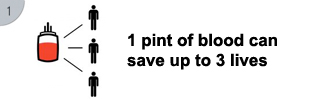
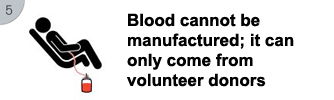
Unfortunately, the fact is that we are not good in donating blood. At large we can’t manage 1 hour in 2 months time to schedule blood donation and we don’t bother much to give (approximately 0.6 lit) half liter of blood which can save up to 3 lives. But there is constant need of blood supply and our contribution is important for a healthy and reliable blood supply. The thought of being able to help save three people’s lives every time you donate blood makes you feel like a better person.
Should I consider anything before donating blood?

Yes, there is eligibility criteria for donating blood. Personally we ourselves should know it in detail and obviously (honest) healthcare professionals will look for the prerequisite before bleeding you.

Eligibility Criteria for Blood Donations:

To ensure the safety of blood donation for both donors and recipients, all volunteer blood donors must be evaluated (physically and medically by healthcare professionals) to determine their eligibility to give blood.
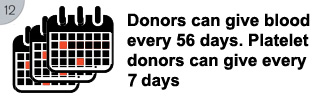
You must be healthy, should carry 150 lbs weight and at least 17 years old to donate to the general blood supply, or 16 years old with parental/guardian consent. There is no upper age limit for blood donation as long as you are well with no restrictions or limitations to your activities.

NOTE: Healthy means that you feel well and can perform normal activities. If you have a chronic condition such as diabetes, healthy also means that you are being treated and the condition is under control. This is healthcare professionals job and they hold confidential interview to get the answers to their questions to take their decision and declare eligibility criteria met or not.

Other aspects of each potential donor’s health history are discussed as part of the donation process before any blood is collected. Each donor receives a brief examination during which temperature, pulse, blood pressure and hemoglobin (or hematocrit) are measured.
Do I need something special to do before donating blood?

NO, nothing special or mandatory to do but still there are some recommendations to do in a day you waned to donate.

– Be sure to drink plenty of fluids the day of your donation.

– Wear clothing with sleeves that can easily be rolled up above the elbow.

– If possible, include iron-rich foods in your diet, especially in the weeks before your donation.

– Bring along a friend/family member, so that you may both enjoy the benefits of giving blood or inspire other to get ready for his/her turn to donate for good cause.

– Blood donation is a simple and very safe procedure so there is nothing to worry about.

How can I make sure my own safety is not violated?

It is not possible to get AIDS or other infectious disease by giving blood, if you make sure below process is followed.
A brand new, sterile, disposable needle is used for blood donation.

You can only donate if your health history permits and you feel well. You are asked general health questions and are given a mini physical – temperature, pulse, blood pressure and hemoglobin are checked – prior to donation to ensure that you are feeling well and that it is safe for you to give blood. Your health history and test results (take your medical record with you) are confidential and cannot be shared without your permission, except as required by law.

Feeling faint or fatigued after donating blood is uncommon.
If it occurs, it most likely will pass in a matter of hours. Most donors feel fine before and after donating, but a small number of people may have a lightheaded or dizzy feeling. If you feel faint, stop what you are doing and lie down until you feel better.

You can help ensure your experience is a positive and rewarding one.
Stay in the refreshment area for the recommended period of time; mention to the staff any unusual feelings or sensations; continue to hydrate throughout the day and avoid strenuous exercise or heavy lifting on the day of donation.

To Your & Nation’s Health and Safety,

Faisal Javed Mir & First Aid to Save a Life Pakistan

Did you like the post? Let’s get connected on FacebookLinkedInTwitter & YouTube.

You might also like:


Posted in Blood Donation, medicine information | Tagged , , , , , , , , , , , , , , , , | Leave a comment

WHY choose First Aid to Save a Life Pakistan

Dear All,

First Aid to Save a Life Pakistan provides the best quality training at very best, affordable and lowest possible rates without compromising on quality of education. Here is the answer to many questions those may come to your mind that why you should choose First Aid to Save a Life Pakistan for training and consultancy jobs.

  • Internationally acceptable and accredited trainings in lowest possible prices in Pakistan.
  • Why go to other countries to avail internationally recognized and acceptable trainings in first aid, cpr and aed programs, when we provide you the training in Pakistan at reasonable investment.
  • Your people have no travel costs, no time off-site. Why travel to the training, when we bring the training to you?
  • We utilize examples and problems from your business in our training, not made-up examples that are just not relevant.
  • We don’t believe one-size-fits-all, cookie-cutter training solutions are effective. You can get those elsewhere!
  • If you choose, we provide optional pre-exams and post-exams, for proof of training effectiveness.
  • We provide training certificates, as proof of education, and training credit, as applicable.
  • We’re ready when you are! We work to your schedule, not ours. Weekend training? No problem for us.
  • Small classes or large classes no problem with us. We provide training unique to your needs.
  • Our training is always offered with No-Nonsense pricing, all expenses included, anywhere in the Pakistan.
  • Successful participants will receive (individual) successful certificate with 2-years validity card from MEDIC First Aid International. Others give one year at cheapest rate which will add up more future expenses.
  • A personal wallet skill guide card which can be used for quick reference/revision.
  • Award-winning, professionally produced videos.
  • Safe and effective first aid response techniques based on G2010 Guidelines for CPR and First Aid.
  • A proven “seeing, hearing, doing, speaking, feeling” approach to learning.
  • 2-professional adult CPR-AED training manikins (with CPR monitor) for realistic experiences and feedback.
  • 1-professional infant manikin.
  • First aid supplies for pure training purposes.
  • Automated online bookings which may take 1 minute to complete the online booking process.
  • We firmly believe your training experience shouldn’t stop at the end of your course. All our delegates get access to 24 months of continuous learning links, information regarding any updates in guidelines, support and advice from our experienced trainers.
  • Quality of education is also maintained in accredited training courses where only 20 participants are enrolled in one session.
  • Online delegate feedback available to course participants.
  • Training booklet, wallet card, certificate, lunch and tea are included in course fee.
  • We upload course videos on our YouTube Channel from where you can share your memories and learning experiences with you contacts.
  • And many more reasons.

We are ready to answer your queries please send them to:

info@firstaidtosavealife.com

Also, do let us know if we have missed something which you want to see in our upcoming courses or any other facility which we are not providing in our courses.

To Your Health, Safety and Prosperity,

Faisal Javed Mir & First Aid to Save a Life Pakistan

Did you like the post? Let’s get connected on FacebookLinkedInTwitter & YouTube.

You might also like:

Posted in Miscellaneous, Why choose First Aid to Save a Life | Tagged , , , , , , , , , , , , , , , , , , , , , , , , , , , , , , , , , , , , , , , , , | Leave a comment