Road Traffic Victims and Emergency First Aid

As-Salam-o-Alaikum Respected Subscribers & Readers,

Road traffic crashes (commonly RTA – road traffic accidents) kill nearly 1.3 million people every year and injure or disable as many as 50 million more. They are the leading cause of death among young people aged 15–29 years.

In October 2005, the United Nations General Assembly adopted a resolution which calls for governments to mark the third Sunday in November each year as “World Day of Remembrance for Road Traffic Victims”. The day was created as a means to give recognition to victims of road traffic crashes and the plight of their relatives who must cope with the emotional and practical consequences of these tragic events.
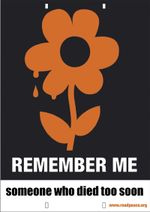
First Aid to Save a Life Pakistan encourages our young generation and respected parents to support safe driving behavior and through education and training before any young child get access to any type of motor like bike or car. They should also adopt correct behavior to ensure occupants (passenger, children and/or infants) safety and must have proper restraints for them too.

Road traffic crashes are among the world’s largest public health issues:

  • Traffic fatalities are the leading cause of death for people ages 15-45 worldwide, resulting in 1.3 million deaths per year.

Road traffic crashes are robbing communities and developing countries of their future – the young generation:

  • Globally, more than 40% of all road traffic deaths occur among the 0 to 25 age group; &
  • 85% of traffic fatalities and 96% of child traffic fatalities occur in low- or middle-income countries.

Road traffic crashes place extreme financial strain on developing economies:

  • For many low- and middle-income countries, the cost of road crashes represents between 1-2% of GNP (GDP);
  • In some cases exceeds the total amount they receive in international development aid; &
  • Many road traffic crash victims are the primary income generators for their family. The injury or death of these victims negatively impact the standard of living for their entire family.

Road traffic crashes are predictable and can be prevented

People who survive the initial crash frequently suffer brain damage that impedes their ability to continue as an income generator for their families, and in fact may require a lifetime of personal care that can drain resources from already impoverished families. Helmet use makes a difference.  Appropriate helmet use reduces the risk of fatality by an average of 42% and of severe head injury by 69%.

A recent case study of motorcycle accidents from Los Angeles and Thailand similarly found that that un-helmeted riders were two to three times as likely to be killed and three times as likely to suffer a ‘disastrous outcome’. Of survivable crashes, universal helmet use would have prevented about 80% of fatalities and brain injuries.

The goal of training programs offered by First Aid to Save a Life Pakistan is to help you gain the knowledge, skills, and confidence necessary to manage a medical emergency until more advanced help i s available.

Emergency First Aid does not require you to make complex decision or have in-depth medical knowledge. It’s easy to learn, remember, and perform.

Being volunteer is very good and our social and ethical responsibility to help victims and provide first aid (if trained to do so) but have to remain extremely careful if you are providing first aid on or near a roadway. Each year, many people are struck and killed by motor vehicles while providing assistance.

On this World Day of Remembrance for Road Traffic Victims, let us mobilize all possible contributions; knowledge and experience; to improving road safety. Let us honour those who have lost their lives on the world’s roads by acting to save the lives of others.

To Your Health & Safety,

Faisal Javed Mir & First Aid to Save a Life Pakistan

Did you like the post? Let’s get connected on FacebookLinkedInTwitter & YouTube.

You might also like:

Posted in Advanced First Aid, emergency care and first aid, Emergency First Aid, UN Annual Events, World Day of Remembrance for Road Traffic Victims | Tagged , , , , , , , , , , , , , | Leave a comment

DNAR and Ethics in Emergency Rescue Efforts

As-Salam-o-Alaikum Respected Subscribers and Readers,

The goals of resuscitation are to preserve life, restore health, relieve suffering, limit disability, and respect the individual’s decisions, rights and privacy. In our today’s post we will talk about the early decisions made by the individual (if known to us at time of help needed), ethical and social rights and whenever his/her privacy matters with life saving services/skills needed to be administered to him/her.

Decisions about cardiopulmonary resuscitation (CPR) efforts are often made in seconds by rescuers who may now know the victim of cardiac arrest or whether an advance directive exists or not. As a result, administration of CPR may be contrary to the individual’s desires or best interests. The below will help all, healthcare professionals and layman rescuers, to understand the requirements and ethics of administering resuscitation and basic life supporting skills in any life-threatening situation.

Ethical Principles:

Rescuers should consider ethical, legal, and cultural factors when caring for those in need of CPR. Although rescuers must play a role in resuscitation decision making, they should be guided by science, the individual patient or surrogate preferences, local policy, and legal requirements.

Principle of Respect for Autonomy:

The principle of respect for autonomy is an important social value in medical ethics and law. The principle is based on society’s respect for competent individual’s ability to make decisions about his or her own healthcare. Adults are presumed to have decision-making capability unless they are incapacitated or declared incompetent by a court of law. Truly informed decisions require a strong healthcare provider-patient relationship/communication and a 3-step process:

1:- the patient receives and understands accurate information about his or her conditions, prognosis, the nature of any proposes interventions, alternatives, and risks and benefits;

2:- the patient is asked to paraphrase the information to give the provider the opportunity to assess his or her understanding to correct any misimpressions; and

3:- the patient deliberates and chooses among alternatives and justifies his or her decision.

WHEN the individual’s preferences are unknown or uncertain, emergency conditions should be treated until further information is available.

Do Not Attempt Resuscitation (DNAR):

A Do Not Attempt Resuscitation (DNAR) Order is a legitimate document in which one expressed his/her desire to not attempt any resuscitation effort or clearly state to “Allow Natural Death” without any resuscitation attempts. A DNAR should explicitly describe the resuscitation interventions to be performed in the event of a life-threatening emergency. In most cases, a DNAR order is preceded by a documented discussion with the patient, family, or surrogate decision maker addressing the patient’s wishes about resuscitation interventions. In addition, some jurisdictions may require confirmation by a witness or a second treating physician.

Withholding and Withdrawing CPR Related to Out-of Hospital Cardiac Arrest (OHCA):

We, the First Aid, CPR and AED trainers teach our students (as per the guidelines states) to immediately begin CPR without seeking consent, because any delay in care dramatically decreases the chances of survival. While the general rule is to provide emergency treatment to a victim of cardiac arrest, there are a few exceptions where withholding CPR might be appropriate, as follows:

1:- Situations where attempts to perform CPR whould place the rescuer at risk of serious injury or mortal peril;

2:- Obvious clinical signs of irreversible death; &

3:- A valid, signed, and dated advance directive indicating that resuscitation is not desired, or a valid, signed, and dated DNAR order.

To Your Health & Safety,

Faisal Javed Mir & First Aid to Save a Life Pakistan

Did you like the post? Let’s get connected on FacebookLinkedInTwitter & YouTube.

You might also like:

Posted in emergency care and first aid, First Aid CPR and AED, First Aid or EMS Ethics | Tagged , , , , , , , , , , , , , , , , , , | 1 Comment

Are you willing to save a life?

As-Salam-o-Alaikum Respected Subscribers & Readers,

At first I would like to ask you if you are interested to learn, “how to save a life”. Are you really interested to learn how to save a life by doing no more than 10 to 20 minutes workout if you found someone unconscious? If YES, then you are a GREAT PERSON, A HERO, and I have no words to praise you. AND if you don’t know how to save a unconscious patient’s life then learn it today and BE A HERO.

Let me tell you in steps about automated external defibrillators, sudden cardiac arrest and how First Aid to Save a Life Pakistan can help you to fight this.

Why do we need AEDs?

AEDs save lives. When a person has a Sudden Cardiac Arrest, the heart becomes arrhythmic. Every minute that the heart is not beating lowers the odds of survival by 7 percent to 10 percent. After 10 minutes without defibrillation, very few people survive.

What does the American Heart Association (AHA) say about AEDs?

The American Heart Association (AHA) strongly supports having AEDs in public areas such as sports arenas, office complexes, schools, doctors’ offices, shopping malls, airports, and other public places. The AHA also advocates that all police and fire and rescue vehicles be equipped with an AED. 

What is this Sudden Cardiac Arrest?

The killer of more than 400,000 people a year in USA and more than 140,000 people a year in Pakistan, sudden cardiac arrest (SCA) causes the heart’s normal rhythm to suddenly become chaotic. The heart can no longer pump the blood effectively and the victim collapses, stops breathing, becomes unresponsive, and has no detectable pulse. SCA can strike anyone, anytime & anywhere.

Children, teenagers, athletes, old people — can all have SCAs. Although the risk of SCA increases with age and in people with heart problems, a large percentage of the victims are people with no known risk factors.

 What is the recommended treatment of SCA?

Defibrillation is the only treatment proven to restore a normal heart rhythm. When used on a victim of SCA, the automated external defibrillator (AED) can be used to administer a lifesaving electric shock that restores the heart’s rhythm to normal. AEDs are designed to allow non-medical personnel to save lives.

How much time do I have to respond if someone has a SCA?

As said above it allows only minutes when it strikes to initiate AED. Defibrillate within three minutes and the chances of survival are 70 percent. After 10 minutes, the chances of survival are negligible.

I know CPR; would not it help?

CPR only buys a little more time, potentially giving the victim a small amount of extra time until a defibrillator arrives. But SCA ultimately requires a shock to restore a normal heart rhythm. As a result, most CPR training now also includes AED training.

Can a non-medical person make a mistake when using an AED?

AEDs are safe to use by anyone who has been shown how to use them. The AED’s voice guides the rescuer through the steps involved in saving someone; for example, “apply pads to patient’s bare chest” (the pads themselves have pictures of where they should be placed) and “press red shock button.” Furthermore, safeguards have been designed into the unit precisely so that non-medical responders can’t use the AED to shock someone who doesn’t need a shock.

How does and AED work?

Two pads, connected to the AED, are placed on the patient’s chest. A computer inside the AED analyzes the patient’s heart rhythm and determines if a shock is required to save the victim. If a shock is required, the AED uses voice instructions to guide the user through saving the person’s life.

What First Aid to Save a Life Pakistan can do for us?

First Aid to Save a Life Pakistan can integrates all required components of a successful AED program while ensuring compliance with local, international and industry laws. We can plan for you a worry-free AED implementation program, which is very easy to manage.

Unfortunately, most of the time, the necessary life-saving equipment does not arrive in time. As a result, typical survival rates are only 2%-5%.

Now there is something you can do to improve the odds dramatically for your community, business, schools, shopping malls, health clubs, hospitality services, personal use, public access and professional rescue services with a solution that is easy to use and inexpensive to buy.

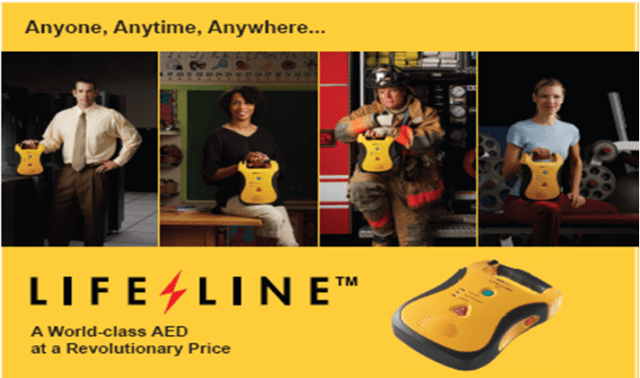
Our life-saving AED program goes beyond simply having a Defibtech Lifeline AED. Our different proposed programs will help you choose one for you to feel comfortable with it and saving lives. These programs will help you prepare your people and organization before sudden cardiac arrest strikes.

The bottom line is that with a modest investment, now you can have a heart-safe environment, where you live and work.

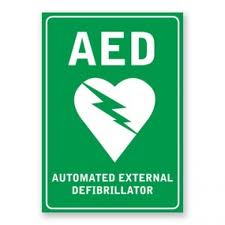
Do you remember the sign of AED to find out/locate or ask for AED to help someone who is having sudden cardiac arrest?

See this sign and look for it to get an AED when someone is found having SCA. If you didn’t find it anywhere then use your two hands to give CPR to save precious time and ask someone to call EMS (1122 or 115) or nearest hospital ambulance for evacuation. You still have done a lot of good work to keep his brain alive and you are still a hero for us and for those who understands your great work.

To Your Health & Safety,

Faisal Javed Mir & First Aid to Save a Life Pakistan

Did you like the post? Let’s get connected on FacebookLinkedInTwitter & YouTube.

You might also like:

Posted in AEDs, CPR and AED, emergency care and first aid, First Aid and CPR, First Aid CPR and AED, First Aid Training Programs | Tagged , , , , , , , , , , , , , , , , , , , , , , , , , , , , , , , , , , , , , , , | Leave a comment

World Stroke Day

As-Salam-o-Alaikum Respected Subscribers and Readers,

Yesterday dated October 29, 2011, World Stroke Day was commemorated all around the world.

Every six seconds, regardless of age or gender – someone somewhere will die from stroke.

This, however, is more than a public health statistic. These are people, who at one time, were someone’s sister, brother, wife, husband, daughter, son, mother, father… friend. They did exist and were loved. Behind the numbers are real lives.

The objective of the campaign is to put the fight against stroke front and center on the global health agenda. The “1 in 6” theme was selected by leaders of the World Stroke Organization (WSO) to highlight the fact that in today’s world, one in six people worldwide will have a stroke in their lifetime. Everyone is at risk and the situation could worsen with complacency and inaction.

The “1 in 6” campaign celebrates the fact that not only can stroke be prevented, but that stroke survivors can fully recover and regain their quality of life with the appropriate long-term care and support. This campaign aims to reduce the burden of stroke by acting on six easy challenges:

1. Know your personal risk factors: high blood pressure, diabetes, and high blood cholesterol.

2. Be physically active and exercise regularly.

3. Avoid obesity by keeping to a healthy diet.

4. If you do then limit alcohol/drugs consumption.

5. Avoid cigarette smoke. If you smoke, seek help to stop now.

6. Learn to recognize the warning signs of a stroke and how to take action.

Stroke is the second leading cause of death for people above the age of 60, and the fifth leading cause in people aged 15 to 59. Stroke also attacks children, including newborns.  Each year, nearly six million people die from stroke. In fact, stroke is responsible for more deaths every year than those attributed to AIDS, tuberculosis and malaria put together – three diseases which have set the benchmark for successful public health advocacy, capturing the attention of the world’s media and which consequently has provoked world leaders, governments and many sectors of civil society to act.

Stroke is indiscriminate and does not respect borders. Individual countries cannot address the challenges of stroke in isolation. World Stroke Day brings together advocacy groups, patient survivor support networks, volunteer stroke societies, public health authorities, physicians, nurses and others within the allied health professions including civil society at-large, for a collaborative approach to comprehensive stroke education, advocacy, prevention, treatment and long-term care and support for stroke survivors. Act now and don’t be the one (1) in six neither let your family and/or friends be the “1 in 6”.

To Your Health & Safety

Faisal Javed Mir & First Aid to Save a Life Pakistan

Did you like the post? Let’s get connected on FacebookLinkedInTwitter & YouTube.

You might also like:
Posted in World Stroke Day | Tagged , , , , , , , , , , , , , , , , , | 1 Comment

Our New Service – OHSAS 18001

As-Salam-o-Alaikum Our Respected Subscriber & Readers,

As promised with you at the start of First Aid to Save a Life (FATSAL) Pakistan that we are committed to excellence in everything we seek to do and deliver what is needed and/or expected by market and our customers. Here we are today presenting the launch of our new consultancy service, OHSAS 18001. Let me give you brief of our OHSAS 18001 consultancy service.

Introduction of OHSAS 18001:

Although OHSAS 18001 is not our (Pakistan’s) local standard neither our regulatory requirement but due to its global acceptance, dynamic structure and most importantly backing of 43 most renowned organizations of the world at times of its creation has made this the most valuable standard to manage occupational health and safety issues.

What First Aid to Save a Life (FATSAL) Pakistan Can Do/Provide:

First Aid to Save a Life (FATSAL) Pakistan have trained, certified and experienced professionals those can set up (independent or integrate) OH&S Management System for your organization to control OH&S risks to foster good and compliance OH&S practices and help you prepare for the final registered certification process.

Key Steps Involved in Achieving OHSAS 18001 Certification:

OHSAS 18001 Standard:

Before we do anything and proceed further our first step will be to give you one authorized copy of the OHSAS 18001 Standard.

Related Trainings:

There are range of workshops and training courses available to help you understand the detailed requirements and implementation criteria of this standard, our legal requirements and other business commitments.

Appointment of Assessors:

A trained, certified and experienced OHSAS 18001 assessors shall be appointed who will have knowledge concerning the nature of your business and will work with you and/or for you to understand your comprehensive OH&S requirements and will initiate the designing of OH&S Management System processes.

Preliminary Assessment:

Preliminary assessment or gap analysis shall be conducted to gather information and determine organization’s requirements before starting work on designing the management system. This assessment will also include the review of available H&S documents in practice including OH&S policy, OH&S objectives, information related to workplace area and other OH&S commitments made by business.

Designing the OHSAS 18001 Management System:

After preliminary assessment our assessors will start their work to design a structured management system which will provides a framework around which people can operate in order for the organization to achieve its desired outcomes in an effective and efficient manner. This model fits in neatly with the structure of other management system documents such as ISO 9001 and ISO 14001. The alignment of the management system documents helps in the facilitation of Integrated Management Systems.

Implementing the Designed Management System:

At this stage the management system designed by FATSAL’s consultants will be implemented for (decided) time period.

Checking the Performance of Designed Management System:

After the testing period the performance of this management system will be evaluated objectively against the set criteria and defined scope to know the extent to which it fulfilled the requirements.

Conducting Surveillance Audit:

The surveillance audit phase is concerned with the ongoing and continual improvement assessment of the control measures and the monitoring and review performance which will assure its multi dimensional adoptability within the organization.

On and after the successful completion of all steps till satisfying and result oriented surveillance audit, any organization can submit their application for external third party audit to attain OHSAS 18001 certificate of registration.

What is Registration:

Registration is when an accredited third party visits an organization, assesses their management system and issues a certificate to show that the organization abides by to the principles set out in the standard (OHSAS 18001).

Once a company has been issued with a certificate as a registrar, visits the organization on a regular basis to assess whether they continue to conform and are still working to the specifications laid out in the (OHSAS 18001) standard.

Benefits of Registration:

Registration demonstrates to customers, competitors, supplier, staff and investors, that an organization uses legal requirements and industry-respected practices.

Additionally,

  • registration by a third party helps an organization demonstrate to stakeholders that the business is run effectively,
  • the process of achieving and maintaining the registration helps to ensure that the organization is seeking to continually improve their activities and demonstrates an innovative and forward thinking approach,
  • the regular assessment process will ensure you continually use, monitor and improve your processes resulting in improved staff responsibility, commitment and motivation,
  • registration can improve overall performance, remove uncertainty and widen market opportunities.

Please send your inquiries to faisal@firstaidtosavealife.com or dial +92 345 5656307 for acquiring our OHSAS-18001:2007 training and consultancy services.

To Your Health & Safety;

Faisal Javed Mir & First Aid to Save a Life Pakistan

Did you like the post? Let’s get connected on FacebookLinkedInTwitter & YouTube.

You might also like:

Posted in Management System Standards, OHSAS 18001 | Tagged , , , , , , , , , , , , , , , , , , , , , , , , , , , , , , , , , , , , | 2 Comments

Do you have stories to share with us

As-Salam-o-Alaikum Respected Subscribers & Readers,

Year end is coming closer and only 65 days are left and in closing weeks we will start discussing what has been achieved and what not.

First Aid to Save a Life Pakistan would also like to share with our subscribers, online readers and web world, what others would like to share with them through us.

So share your successful life saving stories, what you witnessed, where you supported the life saving attempts etc with us to circulate it to others around the world. Also share with us how you can turn the world around you and inspire others to learn basic life saving skills. I have heard lots of inspirational stories from our course participants those have attended the sessions because they wanted to learn and to help to save lives.

Many of us need motivation to learn, so please let your words inspire them about the experiences you had in your life and let others think how they can do better than that. Some of us wanted to learn from others’ experiences, some wanted to learn by their own observations, some preferred to learn by formal education and someone is interested in informal learning. First Aid to Save a Life Pakistan wanted to support all of them. We want to tell them your stories on which they can lay the foundation of objectives of life saving skills; we can also arrange formal classroom or online learning environments for them. And at last we have detailed training and competency based life saving skills programs for the community groups and non-commercial organizations, medium and high grade students, students from universities and lay rescuers of all ages. These are designed to teach students how to perform resuscitation for patients of all ages who are victims of Sudden Cardiac Arrest (SCA), as well as those who are unresponsive or choking or bleeding etc. Here you will learn basic skills to save lives.

 We look forward to learn from your experiences and wanted to share your stories with others to learn by heart and remember what to do in difficult times.

To Your Health & Safety,

Faisal Javed Mir & First Aid to Save a Life Pakistan

Did you like the post? Let’s get connected on FacebookLinkedInTwitter & YouTube.
 
You might also like:
Posted in Emergencies and Social Media, emergency care and first aid | Tagged , , , , , , , , , , , , , , , , , , , , | Leave a comment

Best defibrillator for all your needs!

As-Salam-o-Alaikum Respected Readers & Subscribers,

Only the best home (or portable) defibrillators will do when you are trying to protect your health or the health of someone you love. These are very sophisticated (keeping in view their engineering not for their usability) devices that can help normalize the heart rhythm of someone in cardiac arrest.

In the past, you would only find machines like this in a hospital or an ambulance. Now, however, there are home units you can purchase without a prescription, depending on where you live or what you do. Our today’s post explores various features that are necessary for defibrillators to quality as the best.

A home defibrillator is no better than its batteries. Just like in any electronic device, a dead battery means the unit will not work. This is not, however, like a cell phone or a portable CD player, where you have time to recharge or replace the batteries, as someone’s life may be on the line.

Good models will have an internal system that monitors battery strength and other functions. Problems with the battery should be easy to see when you look at the device. Make a point of checking out reviews to see what is said about battery performance, life, and functionality.

When you are researching and shopping for the best home defibrillators, one obvious but important consideration is that there has to be someone nearby to administer the help. A person having a heart problem will most likely not be able to use the machine on himself, so you don’t only need the device, but a person who is able to use it close at hand. It may be necessary to squat or sit on the floor in order to operate the device. Most people will be able to do this, but in some cases, such as elderly couples where both partners are in poor health, this might be an issue. It’s not enough to just buy the device you also need someone nearby who can operate it.

Investigate the warranties that are offered because companies that truly make the best home defibrillators will offer one to show they stand behind their products. You’re making a pretty substantial investment when you purchase this device.

Because of this you need to be confident of the ability to repair or replace the unit in the event that something goes wrong. Different companies offer warranties of various lengths. You need to know that the home defibrillator you purchase is reliable and a good warranty is the manufacturer’s way of letting you know they stand behind their product.

When buying a device like a home defibrillator, it is really worth the effort to get the best. Because this product is designed to save the lives of you or someone you love, you do not want to sacrifice necessary features. Make sure you research all the major brands and see if one has certain features that are especially important to you. Each of these things will help you identify the best defibrillator for your needs.

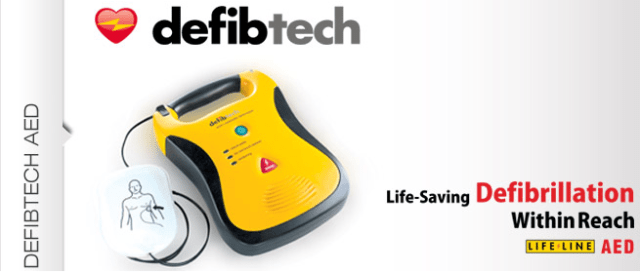
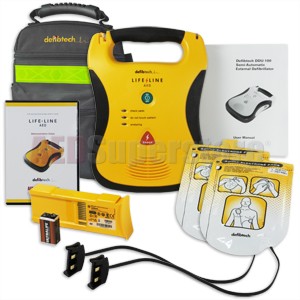
Now there is one product you will get all mentioned above and many other qualities to give equal value to your investment and that is Defibtech’s AED devices.

See below link to advantages and salient features of Defibtech’s AED devices.

To Your Health & Safety,

Faisal Javed Mir

Posted in AEDs, CPR and AED, Emergencies and Social Media, First Aid CPR and AED | Tagged , , , , , , , , , , , , , , , | 1 Comment

2011 Anti-Polio Campaign

As-Salam-o-Alaikum Respected Readers and Subscribers,

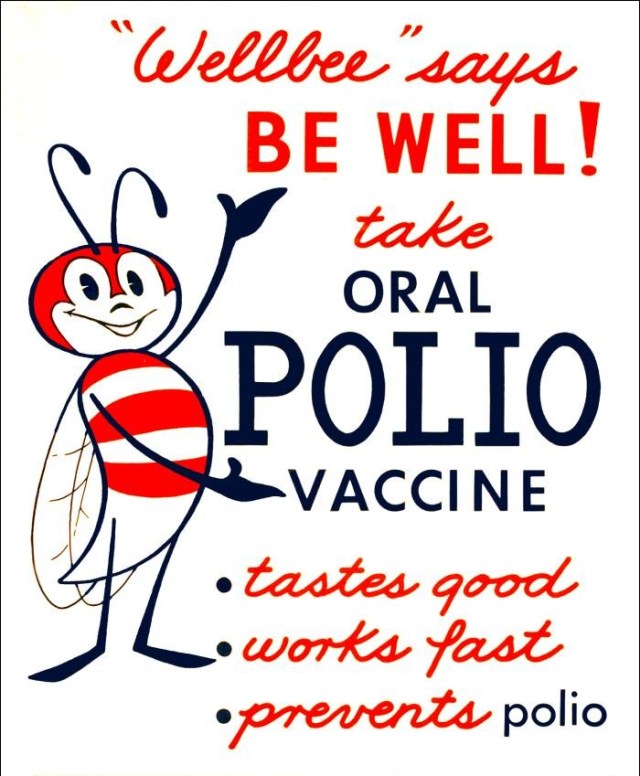
An anti-polio campaign will start from October 24 & will continue till October 27, 2011. Remember the dates & don’t wait for last day. Get your babies vaccinated on very first day so they can keep running out of your hands instead of crawling. I hope you got our message and mean it.

Pakistan is one of only four remaining Polio endemic countries; others include Afghanistan, India and Nigeria.

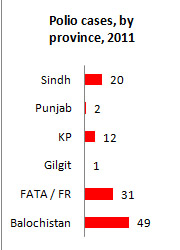
We are still fighting with it and unfortunately 49 cases from Balochistan and 31 cases from FATA+NA are recorded in 2011 which is higher than India, Nigeria and Afghanistan. Please cooperate with vaccination team and help Pakistan.

To Our (Nation) Prosperity,

Faisal Javed Mir & First Aid to Save a Life Pakistan

Posted in Anti Polio Campaign, Emergencies and Social Media | Tagged , , | Leave a comment

Myths about Dengue! Part4

As-Salam-o-Alaikum Respected Subscribers & Readers,

A lot has been said by medical experts on prevention/precautions of dengue fever: and local, provincial and national government also launched very heavy campaigns to control havoc/panic created by dengue fever. First Aid to Save a Life Pakistan would like to discuss some of the myths while discussing precautions and medications for dengue fever.

We have released 3 posts to clear the myths associated with dengue fever and this is our fourth post on the same subject, “Myths about Dengue!”

In our today’s post we will highlight one more myth associated with dengue and while presenting the rationale against the steps taken and advised by governmental authorities in Pakistan to control dengue are beyond our understanding.

4:- Drain the water from swimming pool and cultured water fountain then dry it and refill it 2 times a week – might be a problem for WAPDA and WASA/LSWM organizations also or might be a solution to combat dengue? Doubtful? This should be a BIG NO!

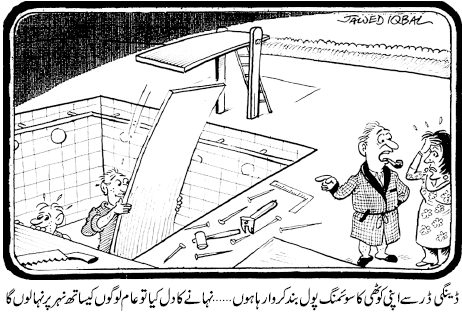
I was surprised the day I heard the news that government has issued the directive to stop service stations in Lahore from working and asked the hotels and owners of private swimming pools to drain the water and dry the pools to help them control dengue spread observed in Lahore in earlier September 2011.

To someone this may appear to be an act of bravery of CM or very calculated and proactive response to control the epidemic but there are also number of persons who think it was & still is not required and have nothing common to stop/control breeding of aedes mosquitoes. They also believe that this was a face-saving step to tell nation that they (government) do care about us and can go to every limit to save their lives.

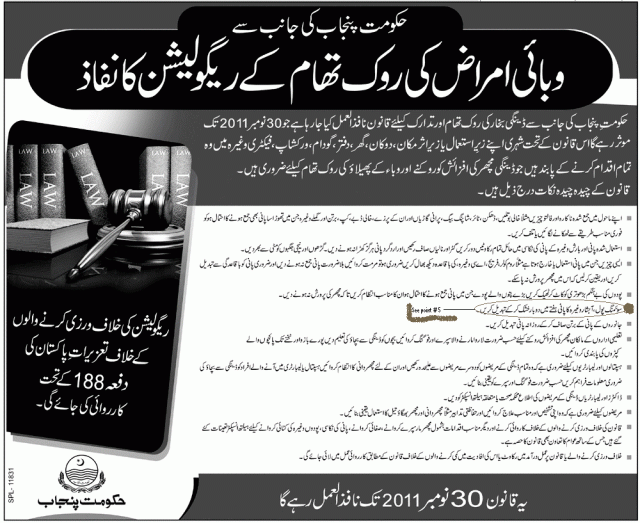
Dengue mosquitoes don’t live near swimming pools and there is no record from any country who have asked their citizens to drain and dry their pools 2 times a week. See below notification by Govt. of Punjab in a newspaper and read clause # 5 for your information.

One thing we would like to appraise here is the promulgation of regulation to stop the infectious diseases and hope it does work well to have long-term benefits and fulfill its prime objective in near future.

Centers for Disease Control (CDC) and Prevention is the world leader (arguably) research center works to protect public health and safety by providing information to enhance health decisions, and it promotes health through partnerships with state health departments and other organizations. CDC focus disease prevention and control (especially infectious diseases and foodborne pathogens and other microbial infections), environmental health, occupational safety and health, health promotion, injury prevention and education activities designed to improve the health of the people of USA and in partnership with other global research centers and organizations like WHO.

Recently CDC has released two MMWR (Morbidity and Mortality Weekly Report) Surveillance Summaries: “Surveillance for Waterborne Disease Outbreaks and Other Health Events Associated with Recreational Water—United States, 2007-2008” and “Surveillance for Waterborne Disease Outbreaks Associated with Drinking Water—United States, 2007-2008.”

The reports cover outbreaks associated with recreational water (e.g., swimming pools) and drinking water. In 2007-2008, the most recent year for which waterborne disease outbreak data are finalized, 134 outbreaks were associated with recreational water and 36 outbreaks were associated with drinking water. Surprisingly (for us) there is no mentioning of aedes mosquitoes presence which causing nuisance or leading to outbreak or even threat to their public in recreational water (e.g., swimming pool). We don’t have any research center in Pakistan on dengue yet we know that swimming pools help them breed and should be drained! Oops I forgot to complete my words that they should be drained and dried, “2 times a week”!

Note: Our intention was not to encourage you to publicly disobey the regulations passed by provincial or national government but it was/is to share what we believe and think about some of the actions performed by them and our understanding about the directive to close swimming pools to control dengue.
 

To Your Health, Safety & Knowledge,

Faisal Javed Mir & First Aid to Save a Life (FATSAL) Pakistan

Did you like the post? Let’s get connected on FacebookLinkedInTwitter & YouTube.

You might also like:
Posted in Dengue, Dengue Fever | Tagged , , , , , , , , , , , , , , , , | Leave a comment

Using Social Media for Social Good

As-Salam-o-Alaikum Respected Readers & Subscribers,

The use of technology and social media for effective advocacy and awareness was a key topic in recent times. But in Pakistan one of our minister who may be don’t know IT Technology and How Internet Traffic Works wants some of the social media giants to be shutdown in Pakistan. I don’t know why but he has expressed his intentions publicly. On the other hand, other nations are conducting surveys to know how people use social media in emergencies.

The Social Good Summit was held in New York from Sep 19 – 22, 2011 to know the role of social media when natural threats and disasters warnings are passed out. The Social Good Summit also highlighted a range of ways in which technology is improving our ability to get messages out.

Remarkable innovations done in the recent past history has changed the face of the earth we know and know we call it global village. Here, I would also like to pay a high tribute to Mr. Steve Jobs (Died Oct 5, 2011), for his innovations in information technology those have major contributions in today’s silicon chip life.

Let me share with you some of the facts those will reveal how we use social media in emergencies.

1:- Online news is the 3rd most popular source for emergency information.

2:-18% use facebook to get information about emergencies.

3:- 24% would use social tools to tell their loved ones that they are safe.

Also, there are devices built and programmed for purpose to locate the nearest AED devices in public areas, shopping malls, sports centers etc.

All above are positive and encouraging signs for those who thinks social networking sites are of no use/benefit. In the end, I would like to include one quote of Mary Engelbreit.

“If you don’t like something change it; if you can’t change it, change they way you think about it.”

To Your Health, Safety & Prosperity,

Faisal Javed Mir & First Aid to Save a Life Pakistan

Did you like the post? Let’s get connected on FacebookLinkedInTwitter & YouTube.

You might also like:
Posted in Emergencies and Social Media, emergency care and first aid, social life and first aid | Tagged , , , , | 1 Comment