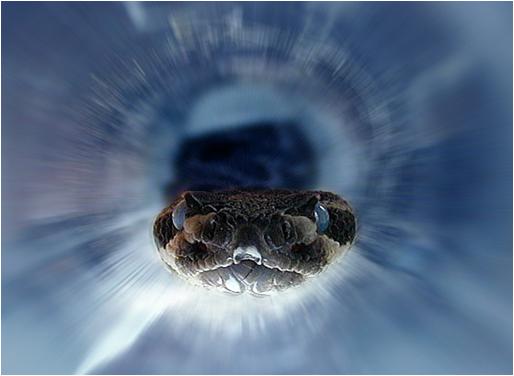
Snakebite Management – DO NOT Practice

Respected All,

In continuation to our last post on “Snakebite Management”, today we will share with you some precautions in snakebite management case. Also, we will highlight the changes incorporated in 2010 guidelines for First Aid and ECC for immobilization (splinting) and control of bleeding.

Below are some of the precautions those should not be overlooked while administering first aid to snakebite patient. Also, consider snakebite a medical emergency and extensive care should be given to the patient.

DO NOT:

1:- Cut and/or Suck: Cutting into the bite site can damage underlying organs, increase the risk of infection, may start profuse bleeding BUT surely this cutting or sucking does not result in venom removal so don’t do it.

There are extractors available in local market to be used for suction BUT never ever try suction through mouth and considering to spit it out. Though the effectiveness of manual extractors is not confirmed by any research team.

2:- Use Ice: Ice does not deactivate the venom and may cause frostbite. Also this contradicts with the application of pressure bandage and is less beneficial.

3:- An Electric Shock: Have you ever heard of people talking about giving an electric shock (not controlled shock by an AED) to the bitten patient who is conscious! If you have heard the story then please find that person and tell him/her not to teach this to others as it could cause burns or electrical problems to the heart (and …. sudden death).

4:- Use Tourniquets: We used it before when were not aware of the affects but NOT NOW*. A tourniquet can provoke gangrene of the limb, failure to assess build up pressure on the limb and unproven benefits. These treatments are not effective BUT may be harmful so don’t practice them.

5*:- Use/Give Anti-Snake Venom: If you are not trained to do so or have no clinical support with you at your remote medical facility then DO NOT give it. An ASV must be administered only by an experienced and qualified doctor in a medical facility where emergency drugs exist to cope with the situation. The adverse reactions of certain snake serums can be more dangerous than the snake’s venom and can kill in a matter of minutes.

6*:- Use/Give Aspirin for Pain: For pain medication give Paracetamol and not Aspirin.

As promised please below for details on tourniquets from 2010 First Aid, CPR and ECC Guidelines.

2005 Guidelines:

The effectiveness, feasibility, and safety of tourniquets to control bleeding by first aid providers are unknown, but the use of tourniquets is potentially dangerous.

2010 Guidelines:

“Because of the potential adverse effects of tourniquets and difficulty in their proper application, use of a tourniquet to control bleeding of the extremities is indicated only if direct pressure is not effective or possible.

Specifically designed tourniquets appear to be better than ones that are improvised, but tourniquets should only be used with proper training.”

To Your Health, Safety and Prosperity,

Faisal Javed Mir & First Aid to Save a Life Pakistan

Did you like the post? Let’s get connected on FacebookLinkedInTwitter & YouTube.

You might also like:
Posted in Advanced First Aid, emergency care and first aid, Emergency First Aid, Project Diary, Why choose First Aid to Save a Life | Tagged , , , , , , , , , , , , , , , , , , , , , , , , , , , , , , , , , , , , , , , , , , , , , , , , , , , , , , , , , , , , , , , , , , , , , , , , , , , , , , , , , , | 7 Comments

ROLL BACK MALARIA

Respected All,

Lets work together to ROLL BACK MALARIA.

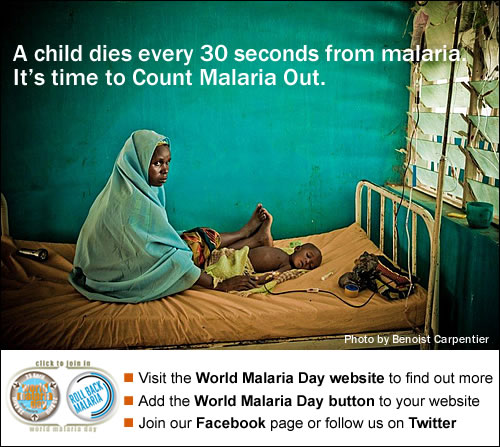
In 2010, about 3.3 billion people – almost half of the world’s population – were at risk of malaria. Every year, this leads to about 216 million malaria cases and an estimated 655 000 deaths. People living in the poorest countries are the most vulnerable.

World Malaria Day – which was instituted by the World Health Assembly at its 60th session in May 2007 – is a day for recognizing the global effort to provide effective control of malaria. It is an opportunity:

  • for countries in the affected regions to learn from each other’s experiences and support each other’s efforts;
  • for new donors to join a global partnership against malaria;
  • for research and academic institutions to flag their scientific advances to both experts and general public; and
  • for international partners, companies and foundations to showcase their efforts and reflect on how to scale up what has worked.

To Your Health, Safety and Prosperity,

Faisal Javed Mir & First Aid to Save a Life Pakistan

Did you like the post? Let’s get connected on FacebookLinkedInTwitter & YouTube.

You might also like:

Posted in FATSAL Training Offers, Miscellaneous | Tagged , , , , , , , , , , , , , , , , , , , , , , , , , , , , , , , , , , , , , , , , , , , , , , , , , , , , , , , , | 1 Comment

Snakebite Management

Respected All,

In continuation to our last post on “snakebite and their types”, today we will discuss snakebite’s management protocol exercised in Exploration and Production (E&P) Companies. I am not sure about this but I have never heard in my brief professional experience that snakes are not hazards at any location within Pakistan. They are everywhere where we lead for search of resources. Snakes are remarkable animals, successful on land (on-shore) and sea (off-shore), forest, grassland, lakes, and desert. In Punjab they approach us from nearby fields and in remaining three provinces they have majority of families.

In our today’s post we will share with you reactive snakebite management protocol instead of proactive and preventive plans. But before going into the details of management plan, lets know something in more details about them.

  • Snakes are almost always more scared of you than you of them.
  • They don’t respect boundaries and in search of food they move a lot and often come into our camp areas.
  • They catch prey, which includes insects, birds, small mammals and other reptiles, including sometimes other snakes (giving us some relief too).
  • They are cold-blooded that is the reason we don’t see them when it is cold outside.
  • Snakes that inject venom use glands, which are actually modified salivary glands and leaves marks of their fang.
  • A snakebite should always be considered as a medical emergency, a life threatening emergency.

As we told in the last article that there are 4 types of common poisonous snakes in Pakistan and also 4 categories venom.

There are 4 types of poisonous snakes in Pakistan.

1) Common Cobra (Naja Naja)

2) Common Krait (Bungarus caeruleus)

3) Russell’s Viper (Lundi)

4) Saw Scaled Viper

4 Categories of Venom:

1) Cytotoxins: This causes local tissue damage.

2) Hematoxins: This causes internal bleeding.

3) Neurotoxins: This affects the nervous system.

4) Cardiotoxins: This type of venom affects directly on the heart and choking it to death within minutes.

The findings following a venomous snakebite can be misleading. AND it is the PANIC which leads to rush of blood, anxiety and suffocation and ends up in death. Bites by venomous snakes result in a wide range of effects, from simple puncture wounds, swelling, redness, mild or acute pain, itching, suffocation, bleeding etc to life threatening illness and death.

At first we should look for signs and symptoms of snakebite and reassure and calm the patient to help you slowing the absorption of venom (in case of confirmed snakebite) into the body and quickly preparing for medical evacuation and immobilization.

In case of venomous snakebite the speed of action of the venom results in many doctors not being confident to treat such bites at remote locations and with a lack of specialist knowledge and training; most victims are referred to hospitals for confirmation of venom and/or detailed clinical management. Signs and symptoms of snake poisoning cab be broken down into few major categories to make quick guess and lay base for evacuation.

Local effects: Bites of venomous snakes are painful and tender to touch. They can be swell, bleed and blister.

Internal Bleeding: Check for shock and bleeding of internal organs. A victim may bleed from the bite site or bleed spontaneously from the mouth or old wounds. Unchecked bleeding can cause shock or even death.

Nervous System: Assess for nervous system. The victim may have vision problems, trouble speaking, breathing and numbness.

Muscle death: Russel’s venom can directly cause extended muscle destruction. The debris from dead muscle cells can clog up the kidneys and lead to kidney failure.

Eyes: Spitting cobras can actually spit out their venom quite accurately into the eyes of their victims, resulting in severe pain and possible blindness.

Blood Clogging Test: If internal bleeding has started then no need to do this test and often this test is not performed at remote locations due to possibility if it is the case of venomous snake then the bleeding may not stop at (remote) location with minimum resources, where there is no resource of blood is available.

Specific First Aid Tips for Snakebite:

  1. Keep the victim calm and prevent unnecessary movement. Reassure and try to keep him calm.
  2. Lay the casualty down and immobilize the bitten limb if possible with a sling or splint, but don’t elevate it.
  3. Restrict the victim’s physical activity to a minimum. Muscular contraction accelerates the absorption of venom.
  4. Identification of the snake can help the medical authorities determine whether it was venomous or not but don’t endanger yourself trying to capture or kill the snake.
  5. Remove bracelets, rings or other constrictive objects from the bitten limb. Don’t give anything to drink or eat.
  6. Wrap the pressure bandage around the bite site.
  7. Immobilize the extremity.
  8. Check to make sure toes and fingers are still pink and warm, that the limb is not going numb, and that pain is not getting worse.
  9. Safely and rapidly transport the victim to an emergency medical facility.
  10. CPR: In rare or advanced cases where the victim becomes unconscious, open the airway and check breathing. This is where the basics of first aid come in handy. Place the person on the side in a recovery position if breathing is normal and, in cases where breathing has stopped, mouth to mouth resuscitation will be necessary. Cardiac arrest can occur in very rare cases requiring cardiopulmonary resuscitation (CPR).

In our next post we will share some of the precautions to be considered in snakebite cases. Also, we will highlight the changes incorporated in 2010 guidelines for First Aid and ECC on immobilization, pressure bandages, and tourniquets.

To Your Health, Safety and Prosperity,

Faisal Javed Mir & First Aid to Save a Life Pakistan

Did you like the post? Let’s get connected on FacebookLinkedInTwitter & YouTube.

You might also like:

Posted in Advanced First Aid, emergency care and first aid, Emergency First Aid, Project Diary, Why choose First Aid to Save a Life | Tagged , , , , , , , , , , , , , , , , , , , , , , , , , , , , , , , , , , , , , , , , , , , , , , , , , , , , , , , , , , , , , , , , , , , , , , , , , , , , , , | 1 Comment

Snakebite and Their Types

Respected All,

Snakebite present major challenges to companies working in rural and far remote areas. Pakistan is facing severe energy crisis and maximum of its oil and gas reserves are from Khyber Pakhtunkhawa, Balouchistan & Sindh. The Exploration and Production (E&P) Companies have to cover miles for search of these resources and where they found some potential, they set up their temporary living camp and might stay there for as little as 2 months or as long as 1 year in search of oil and/or gas reserves.

Over the past half century the petroleum industry has played a significant role in national development by making large indigenous oil and gas discoveries. These sources are supplying oil + gas to consumption centers through 10000 Kms (approx.) transmission networks and 71,863 Kms of distribution system. This led to millions of man-hours spent in the most difficult terrains throughout Pakistan and snakebite is one of the most likely and biggest threat having severe consequences to the industry workforce.

Snakes are remarkable animals, successful on land (on-shore) and sea (off-shore), forest, grassland, lakes, and desert. E&P Companies are going in search of oil and gas reserves (believe me they don’t follow snakes around their facilities) but the snakes do like their company so they can find something fresh and new to eat. We are scared of them and they too are scared of us but our quest of oil & gas reserves and their to food help us to find each other most often.

There are 4 types of poisonous snakes in Pakistan.

1) Common Cobra (Naja Naja)

2) Common Krait (Bungarus caeruleus)

3) Russell’s Viper (Lundi)

4) Saw Scaled Viper

Their venom is a combination of numerous substances with varying effects. In simple terms, these can be divided into 4 categories:

1) Cytotoxins: This causes local tissue damage.

2) Hematoxins: This causes internal bleeding.

3) Neurotoxins: This affects the nervous system.

4) Cardiotoxins: This type of venom affects directly on the heart and choking it to death within minutes.

Bites by venomous snakes result in a wide range of effects, from simple puncture wounds to life threatening illness and death.

The biggest threat faced by E&P Companies is in search of reserves they have to live in far remote areas and survive with limited resources. A snakebite case is the one having fatal outcomes if gets delayed treatment. The journey wastes precious time to reach a suitable facility to get that treatment and many victims die during the journey (as the victim has no anti venom to rapidly neutralize the venom and no airway equipment to ensure they keep breathing during the journey and to deal with complications at local clinic etc etc).

First Aid to Save a Life (FATSAL) Pakistan in their next post will share what you can do to overcome this most high rank threat so we stay safe, works better, earn better and contribute our skills to help our country find more and more reserves and grow on strong lines.

To Your Health, Safety and Prosperity,

Faisal Javed Mir & First Aid to Save a Life Pakistan

Did you like the post? Let’s get connected on FacebookLinkedInTwitter & YouTube.

You might also like:
Posted in Advanced First Aid, emergency care and first aid, Emergency First Aid, Project Diary, Why choose First Aid to Save a Life | Tagged , , , , , , , , , , , , , , , , , , , , , , , , , , , , , , , , , , , , , , , , , , , , , , , , , , , , , , , , , , , , , , , , , , , , , , | 6 Comments

How You Can Participate Free of Cost in Our Upcoming Courses

Respected All,

SURPRISE SURPRISE SURPRISE!!!

First Aid to Save a Life (FATSAL) Pakistan is pleased to announce today that their organization will allow one to participate free of cost in any of our course who works in his/her individual capacity as a promoter and get help other 4 participants to register in the course.

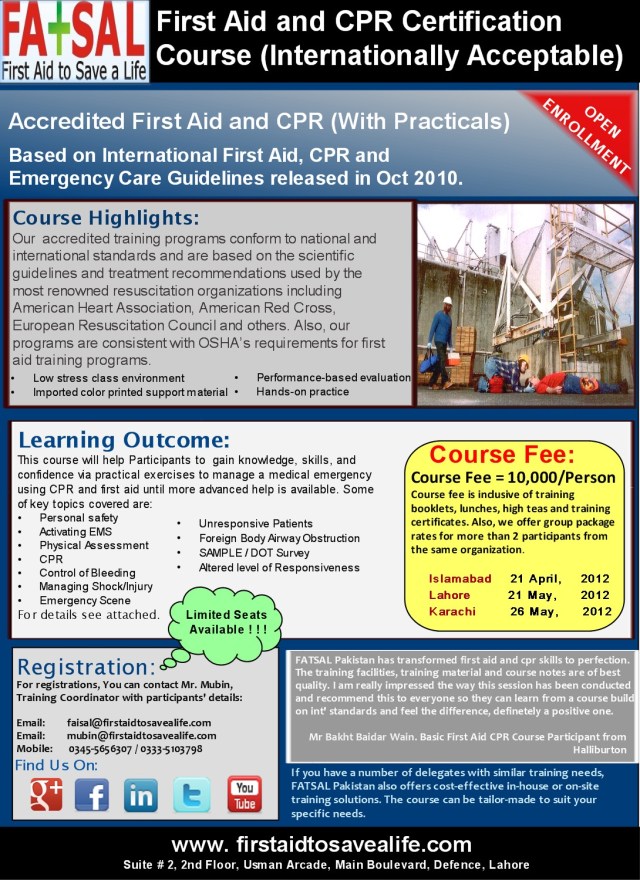
We look forward to your anticipation and to share your reward instantly. Also find below flyer which might help you to grab the attention and answer some of the questions the potential students may have. You can also forward them to our FAQs page to get instant answer to some of the basic and most frequently asked questions.

To Your Health, Safety and Prosperity,

Faisal Javed Mir & First Aid to Save a Life Pakistan

Did you like the post? Let’s get connected on FacebookLinkedInTwitter & YouTube.

You might also like:

Posted in FATSAL Training Offers, Miscellaneous | Tagged , , , , , , , , , , , , , , , , , , , , , , , , , , , , , , , , , , , , , , , , , | 1 Comment

high pRICE or HIGH VALUE ADDITION!

Respected All,

At First Aid to Save a Life (FATSAL) Pakistan you will get more than what you have paid to us for training sessions.Businesses are to share their experiences, knowledge and resources with you so they get paid for it and at FATSAL we make profit as well but its more like a reasonable profit margin unlike other training providers. We provide the best quality training at very best, affordable* and lowest possible rates without compromising on quality of education.

In this post you will find answers to many questions those may come to your mind or might someone mentioned to you about our pricing that we quote high price for training sessions. We have been in situation where we had to answer our position to justify the price we charge is high price or should be refereed as high value addition investment on oneself safety and/or career growth.

The list of facilities we offer is packed with undisputed value addition benefits you have when you sit in our accredited first aid, cpr and aed training courses. Some of them are listed below for information.

  • Internationally acceptable and accredited trainings in lowest possible prices in Pakistan.
  • We’re ready when you are! We work to your schedule, not ours. Weekend training? No problem for us.
  • Successful participants will receive (individual) successful certificate with 2-years validity card from MEDIC First Aid International.
  • A personal wallet skill guide card which can be used for quick reference/revision.
  • Award-winning, professionally produced videos.
  • Safe and effective first aid response techniques based on G2010 Guidelines for CPR and First Aid.
  • A proven “seeing, hearing, doing, speaking, feeling” approach to learning.
  • 2-professional adult CPR-AED training manikins (with CPR monitor) for realistic experiences and feedback.
  • 1-professional infant manikin.
  • First aid supplies for pure training purposes.
  • Automated online bookings which may take 1 minute to complete the online booking process.
  • We firmly believe your training experience shouldn’t stop at the end of your course. All our delegates get access to 24 months of continuous learning links, information regarding any updates in guidelines, support and advice from our experienced trainers.
  • Quality of education is also maintained in accredited training courses where limited participants are enrolled in one session.
  • Training booklet, wallet card, certificate, lunch and tea are included in course fee.
  • We upload course videos on our YouTube Channel from where you can share your memories and learning experiences with you contacts.
  • And many more reasons.

I am sure you will find above information helpful to decide and understand the difference between First Aid to Save a Life Pakistan and other training providers.

To Your Health, Safety and Prosperity,

Faisal Javed Mir & First Aid to Save a Life Pakistan

Did you like the post? Let’s get connected on FacebookLinkedInTwitter & YouTube.

You might also like:

Posted in 1-Day Training Programs, Advanced First Aid, AEDs, Basic First Aid, CPR and AED, emergency care and first aid, Emergency First Aid, First Aid, First Aid and CPR, First Aid CPR and AED, First Aid Training Programs, Why choose First Aid to Save a Life | Tagged , , , , , , , , , , , , , , , , , , , , , , , , , , , , , , , , , , , , , , , , , , , , , , , , , , , , , , , , , , , | Leave a comment

World Congress of Cardiology

Respected Subscribers & Readers,

First Aid to Save a Life Pakistan is pleased to share with you that this year’s “World Congress on Cardiology Scientific Session” is scheduled in Dubai, United Arab Emirates. Join your colleagues from across the globe at the WCC Scientific Sessions 2012 Dubai to share the latest science on treatment and prevention. It is the forum for all experts in the field as well as commercial, public and non-governmental parties to meet and exchange knowledge. This event shall benefit the world from April 18 to 22, 2012.

The World Congress of Cardiology is a major international event that not only focuses on the cardiology problems of the region in which it is hosted −by working alongside our national members, and for 2012 this will be the Middle East − it also addresses and tackles the importance of cardiovascular disease on a global scale by attracting a strong and enviable international faculty of experts.

Dr Arif Abdullatif Al Mulla, Dr Alawi Alsheikh-Ali, Dr Jeroen Bax and Dr Robert Bonow are leading the WCC 2012 Scientific Programme Committee (SPC) that develops the  following scientific topics which will be covered during the WCC Scientific Sessions 2012 by world-renowned speakers:

  • Arrhythmias
  • Heart failure / Left ventricular function / Myocardial function
  • Valvular disease / Pulmonary circulation / Myocardial-pericardial disease
  • Ischemia / Coronary artery disease / Coronary interventions
  • Peripheral circulation / Stroke / Non-coronary interventions
  • Hypertension
  • Epidemiology / Prevention / Health promotion / Health advocacy
  • Dyslipidemia & Metabolic disorders
  • Basic science
  • Cardiac imaging
  • Pediatrics / Congenital heart disease
  • Nursing

Read the full advanced programme here.

Special sessions including joint sessions with WHF members, the World Health Organization, the Gulf Heart Association or the Pan Arab Heart Failure Association will also feature in WCC 2012 scientific programme.

For the first time, two workshops on Echocardiography and Electrocardiography are jointly organized with Emirates Cardiac Society.

The event shall be organized at Dubai International Convention Centre (DICEC), Sheikh Zayed Road, World Trade Centre, Roundabout, Dubai.

First Aid to Save a Life Pakistan wish them very best of luck for success of this event.

To Our Health and Safety,

Faisal Javed Mir & First Aid to Save a Life Pakistan

Did you like the post? Let’s get connected on FacebookLinkedInTwitter & YouTube.

You might also like:

Posted in Healthcare and Medical Expo, Industrial News, World Heart Congress | Tagged , , , , , , , , , , , , , , , | Leave a comment

Don’t OVERLOOK These REQUIREMENTS!

Respected All,

Numerous standards promulgated by the Govt. of Pakistan and Provincial Governments to manage H&S contain requirements for employee training. Different phrases used to highlight the importance of trainings or explicitly mentioned training names and/or subjects to provide trainings to their workforce. Typically, these standards state “the employer must provide training to affected employees,” or similar language. Unfortunately we focus more on quality and production and overlooked some occupational safety training requirements those are more emphasized in our local laws. Here  as well we differentiate from full-time to part-time employees, direct to contract employees and day-shift to night-shift employees. The training requirements for the categories mentioned above should not be overlooked but we tend to see things differently.

Today we will talk about the first aid training requirements. It is believed that proactive approach and behavior emphasis is beneficial for organizations to take the matters addressed by local laws and industry requirements to avoid losses and comply law.

Organizations of all kinds are increasingly concerned with achieving and demonstrating sound occupational health and safety (OH&S) performance by controlling their OH&S risks and workplace injuries and illnesses is major concern. Many organizations do so in the context of increasingly stringent legislation or some of the offices are giving more emphasis and are now monitoring their implementation.

Below are some of the categories where first aid training requirements should be evaluated and should not be overlooked.

  • Newly hired employees must be trained in first aid awareness sessions before they are exposed to hazards. Unfortunately, some companies provide a quick “safety orientation/induction” that covers very little of the required information and mostly does not involve trainings. They should take serious steps to do a proper, thorough orientation involving awareness level sessions for the new hires.
  • Part-time employees must also be trained in situations in which employee training is required. Just because part-time employees do not work for complete shift or 48 hours a week does not mean they are exempt from local requirements as the Factories Act does impose some requirements on seasonal industry/factories.
  • Temporary service employees must also receive all required safety training. Employers are responsible for providing site-specific training for employees on the hazards of the workplace and procedures that are required to work safely. Companies should pay careful attention to the temporary service/workforce to ensure nothing is omitted or forgotten.
  • Night shift workers often get overlooked when it comes to employee safety training. Most companies often overlooked employee safety training programs for night/late shift workers. They should also consider other contributing factors those may delay the emergency response in night times as well.
  • Management personnel may need to be included in training efforts too. Oftentimes, we observe that workers have been thoroughly trained, while the middle or higher management staff (who might have the same exposures) did not attend the training classes.
  • Office workers are often overlooked and claims that there are no hazards for office workers. Secretaries, accountants, bank officials, floor managers, lower clerical staff or other office workers might stay in the office most of the time, but they still need training on applicable topics, such as emergency action plans, CPR, AED, Fire Safety and evacuation routes.
  • Employees who work at remote/client locations whether permanently or temporarily, should have training and facilities to manage injuries during travel or work at remote/client locations. Such staff might need additional trainings on hazards and procedures specific to their work area.
  • Employees exposed to new hazards, such as those working in a revamped work operation where new chemicals, equipment, or machinery are provided, may also need additional training on first aid as per the recommendations of Material Safety and Data Sheets (MSDS).
  • Other employee categories could also exist. Please leave a comment if you think of anything that I might have overlooked.

First Aid to Save A Life! Pakistan provide first aid trainings & consultancy services to establish, implement and maintain emergency management systems. First Aid to Save A Life! Pakistan (FATSAL Pakistan) provides a range of training (accredited and non-accredited) programs. FATSAL is an approved and registered training center by MEDIC First Aid International in Pakistan and is the only training center by MEDIC First Aid International in Pakistan to conduct registered training programs.

First Aid to Save a Life Pakistan is best option for your training needs. Our training courses are specifically designed to help businesses comply with workplace first aid requirements. The instructional design of MEDIC First Aid training programs uses a video-based, instructor-facilitated, systematic approach that helps to ensure consistent training.

We are confident that one time investment in our courses will pay-off for a long term yet effective training benefits in retention of skills and knowledge.

To Your Safety & Growth,
Faisal Javed Mir & First Aid to Save a Life Pakistan

Did you like the post? Let’s get connected on FacebookLinkedInTwitter & YouTube.

You might also like:

Posted in OHS Training, Why choose First Aid to Save a Life | Tagged , , , , , , , , , , , , , , , , , , , , , , , , , , , , , , , | 16 Comments

FATSAL Approaching Hyderabad!

Respected All,

First Aid to Save a Life (FATSAL) Pakistan is pleased to announce that we will reach Hyderabad (Pakistan) on June 16, 2012 to conduct their first ever training course. We are pleased and honored that within last 16 months we have touched 3 major cities of Pakistan and with your continuous support and trust on our services, we will reach more milestones.

First Aid to Save a Life (FATSAL) Pakistan will hold one-day (fire safety and first aid) special safety training  program and one workshop on CPR and AED respectively on June 16 & 17 (Saturday and Sunday) to benefit local community. We are confident that our above mentioned community training programs will be beneficial for communities, businesses, industries, young professionals, and especially HSE and healthcare professionals.

The details of the programs are:

Saturday, June 16, 2012:

Program Name: Fire Safety and First Aid Training Program

Duration: 8-Hours

Methodology: Theory + Video Lecture + Workshop + Practical.

Certificate: Valid for 2-years

Course Fee: = 3,000/- PKR / Person

Refreshments: Lunch + High-Tea

—————————————

Sunday, June 17, 2012:

Program Name: 2-Hours CPR & AED Workshop

Duration: 2-Hours

Sessions: 3 sessions of 2-hours each shall be conducted.

Methodology: Theory + Video Lecture + Workshop + Practical.

Certificate: Valid for 1-year (formal certificate is not included in the mentioned price)

Course Fee: = 500/- PKR / Person

Refreshments: High-Tea

To Your Safety,
Faisal Javed Mir & First Aid to Save a Life Pakistan

Did you like the post? Let’s get connected on FacebookLinkedInTwitter & YouTube.

You might also like:


Posted in First Aid CPR and AED | Tagged , , , , , , , , , , , , , , , , , , , , , , , , , , , , , , , , | 3 Comments

ABC of Fall Protection – Our New Training Service

Respected All,

First Aid to Save a Life (FATSAL) Pakistan is very pleased to announce today an induction of new training service, Personal Fall Protection Safety, commonly known as Scaffolding Safety under the umbrella of First Aid to Save a Life Pakistan.

We were and still are continuously receiving requests and encouragements to launch more training services in quick time. We would like to thank all of them and would like to assure them that we have plans and are taking our steps as we had measured them and going towards our target which is to provide wide range of training and consultancy services to industry to train their employees and fulfill regulatory requirements.

In real life we need protection against FALL. We are not Superman (an illusive film character) might have a force of gravity that is greater than the gravity here on earth and, because of that, Superman is “able to leap tall buildings in a single bound” and come down safely. You and your employees, however, need some protection. Ensuring that those employees use that protection, always, is our task.

In this article, I would like to present you with some techniques that can help you understand training requirements to keep your employees engaged when you need to talk about fall protection.

What do the following numbers have in common?

4′

6′

10′

15′

So what did you come up with?

These are Occupational Safety and Health Administration’s (OSHA) requirements for when guarding and/or fall protection is required.

We referenced OSHA standard above as these are commonly practiced all around the world and acceptable within Pakistan, as these are the stringent as compared to protection described in local regulations.

Training Schedule:

1) March 26, 2012 – Monday (Lahore – 1-Day);

2) May 07, 2012 – Monday (Islamabad – 1-Day); &

3) June 23, 2012 – Saturday (Lahore – 1-Day).

Training Duration: 1-Day, 2-Days & 3-Days.

Cost / Person: =8000 PKR/Person for 1-Day;

=15,000 PKR/Person for 2-Days;

=20,000 PKR/Person for 3-Days.

Methodology: Presentations, Videos, Discussions, Individual and Group Exercises & Practical.

Registration: For registration, do send email to faisal@firstaidtosavealife.com or call 0345-5656307.

Once again we would like to thank you all for your liking, support and continuous encouragement. Rest assure, we always do our best to present trainings and consultancy services at competitive prices without compromising quality of education and training and will keep doing this better and better.

To Your Safety,
Faisal Javed Mir & First Aid to Save a Life Pakistan

Did you like the post? Let’s get connected on FacebookLinkedInTwitter & YouTube.

You might also like:

Posted in 1-Day Training Programs, OHS Training | Tagged , , , , , , , , , , , , , , , , , , , , , , , , , , , , , , , , , , , , , | 1 Comment