Do you know this before?


Respected Readers and Subscribers,

At First Aid to Save a Life (FATSAL) Pakistan no question/s remained unanswered. Today we will give answers to some of the questions mostly asked by our customers and you can also recall and submit any of your question/s.

Do MEDIC First Aid training programs follow American Heart Association® (AHA) guidelines?

Yes. MEDIC First Aid training programs follow the most recent International Consensus on Cardiopulmonary Resuscitation (CPR) and Emergency Cardiovascular Care (ECC) Science with Treatment Recommendations (CoSTR) as well as the AHA Guidelines for Cardiopulmonary Resuscitation and Emergency Cardiovascular Care.

Are training programs recognized?

Yes. Internationally 0ur programs are accepted as substantially equivalent to the AHA, American Red Cross (ARC) by regulatory authorities.

Are training programs approved by OSHA?

The Occupational Safety & Health Administration (OSHA) does not approve first aid or CPR training programs, instructors, or trainees. However… our programs help organizations comply with national laws, industrial training and OSHA requirements for workplace health and safety training.

Can I be held responsible if something bad happens to the person I am helping?

The International law states that a person offering aid must do so in a reasonable and prudent manner within that person’s level of skill and must ask for victim’s consent before anticipating any physical action. Furthermore, once a person had begun care the law states that care must continue until other help of an equal or greater skill level is obtained or until the rescuer had reached a level of exhaustion that makes continuing impossible.

What if I don’t remember what to do?

This is a common fear of newly trained people. The course designed by MEDIC FIRST AID is effective because the seeing, hearing, doing method of training increases the retention of skills. You may have heard stories that these skills come back when faced with a situation that you’ve practiced in class.

How can I be sure I’m prepared to deal with an emergency?

In addition to having the MEDIC FIRST AID pocket manual handy, ensuring that you have the appropriate barrier products will help you prepare for an emergency.

How often should I refresh or update my skills?

Refresher Requirements: For basic and/or advanced first aid courses, we do recommend to refresh complete course after one-year. But CPR and AED skills should be refreshed after every six-months.

Retraining Requirements: Retraining Requirements vary from company to company, but we recommend retraining every two years, if not more frequently.

For course specific requirements kindly see course brochures.

Is there a minimum age to take a CPR and/or First Aid course?

Age is not a reasonable measure of an individual’s ability to learn or perform CPR or first aid. A person of any age who has the physical ability to perform the required skills (ventilation plus compressions or hands-only CPR) may participate in these programs. Instructors bear the responsibility of ensuring that each participant meets the core knowledge and skill objectives for successful completion.

Fore details of other training features and facilities, visit our detailed post on it, “Upcoming Courses at Discount Rates”.

To Y(our) Health, Safety and Prosperity,

Faisal Javed Mir & First Aid to Save a Life Pakistan

Did you like the post? Let’s get connected on FacebookLinkedInTwitter & YouTube.

You might also like:


Posted in First Aid Awards | Tagged , , , , , , , , , , , , , , , , , , , , , , , , , , , , , , , , , , , , , , , , , , , , , , , , , , , , , , , , , , , , , , , , , , , , , , , , , , , , , , , , , , , , , , , , , , , , , , , , , , , , , , , , , , , , , , , , , , , , , , , , , , , , , , , , , , , , , , , , , , , , , , , , , , , | Leave a comment

Lahore – Are you enrolled to get maximum benefit?

Respected Readers and Subscribers,

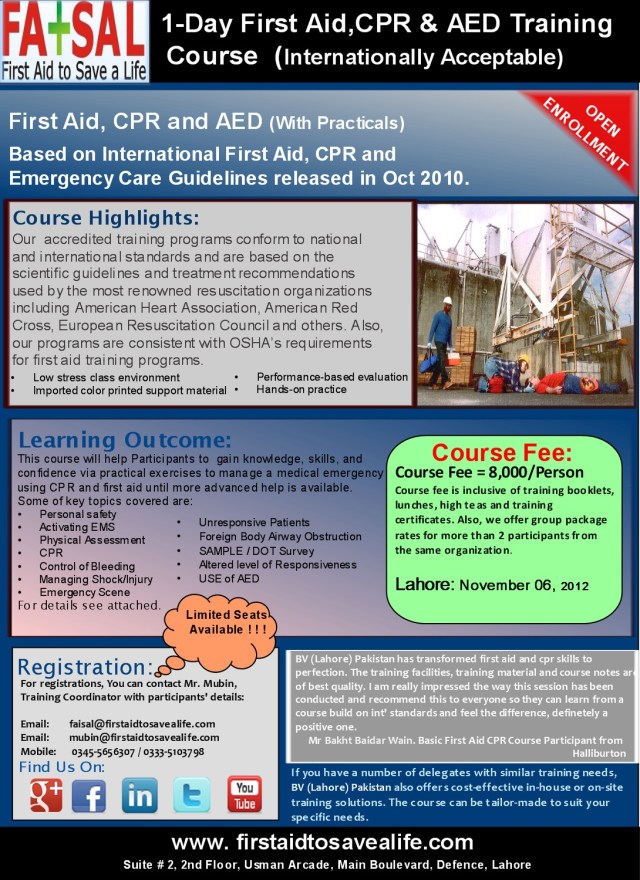
First Aid to Save a Life (FATSAL) Pakistan is pleased to share more detailed information on our upcoming, internationally accredited, training courses with BIG DISCOUNT OFFER. Please note that this discount offer is valid from November 2012 till 31st January, 2013, a one of the longest discount offer in Pakistan in first aid training industry. We have training courses in Lahore, Islamabad, Karachi, Multan, Peshawar & Sialkot. Do let us know if you have 1o or more number of delegates to be trained in one city and we can join you there to run the session for your organization.

Everyone likes to think they are different. We are the same but let me assure you its not just talk. Frankly we try much harder to offer a more attentive, imaginative and enhanced and credible learning experiences.

Training Sessions planned for Lahore:

Sr No.  Date          Course Name                    Registration    Fee

1           Nov 06     First Aid, CPR & AED      Enroll Here     8000

2          Dec 23       First Aid, CPR & AED      Enroll Here     8000

In our sincere attempt to cover more cities, we could not plan more training sessions in bigger cities like Lahore and Karachi. But we can schedule a session for your organization if you have 10 or more participants. Please remember that price is not an issue for us so please speak freely on your budget window and let us have our chance to see if you can offer you a competitive proposal.

The list of facilities we offer in our accredited training courses are packed with undisputed and unmatched value addition benefits. Some of them are:

  • Internationally acceptable and accredited training in lowest possible price in Pakistan.
  • Successful participants will receive (individual) successful certificate with 2-years validity card from MEDIC First Aid International.
  • A personal wallet skill guide card which can be used for quick reference/revision.
  • Award-winning, professionally produced videos.
  • & Many other unmatched facilities.

Fore details of other training features and facilities, visit our detailed post on it, “Upcoming Courses at Discount Rates”.

The deadline for this session is November 03, 2012 (Saturday).

To Y(our) Health, Safety and Prosperity,

Faisal Javed Mir & First Aid to Save a Life Pakistan

Did you like the post? Let’s get connected on FacebookLinkedInTwitter & YouTube.

You might also like:

Posted in First Aid Awards | Tagged , , , , , , , , , , , , , , , , , , , , , , , , , , , , , , , , , , , , , , , , , , , , , , , , , , , , , , , , , , , , , , , , , , , , , , , , , , , , , , , , , , , , , , , , , , , , , , , , , , , , , , , , , , , , , , , , , , , , , , , , , , , , , , , , , , , , , , , , , , , , , , , , , , , | Leave a comment

Upcoming Courses at Discount Rates!!!


Respected All,

First Aid to Save a Life (FATSAL) Pakistan is pleased to announce discount on their upcoming internationally accredited practical training courses announced for Islamabad, Lahore, Karachi, Peshawar and Multan. This discount offer is valid from November 2012 till January 2013.

Kindly remember that we have limited seats available in each course so don’t wait for last week and finalized your registration as early possible to get benefit from this one time discount offer.

Kindly visit our upcoming trainings page for more comprehensive details and/or our online registration page.

The list of facilities we offer in our accredited training courses is packed with undisputed and unmatched value addition benefits. Some of them are:

  • Internationally acceptable and accredited trainings in lowest possible prices in Pakistan.
  • Successful participants will receive (individual) successful certificate with 2-years validity card from MEDIC First Aid International.
  • A personal wallet skill guide card which can be used for quick reference/revision.
  • Award-winning, professionally produced videos.
  • Safe and effective first aid response techniques based on G2010 Guidelines for CPR and First Aid.
  • A proven “seeing, hearing, doing, speaking, feeling” approach to learning.
  • 2-professional adult CPR-AED training manikins (with CPR monitor) for realistic experiences and feedback.
  • 1-professional infant CPR-AED training manikin (with CPR monitor) for realistic experiences and feedback.
  • First aid supplies for pure training purposes.
  • We firmly believe your training experience shouldn’t stop at the end of your course. All our delegates get access to 24 months of continuous learning links, information regarding any updates in guidelines, support and advice from our experienced trainers.
  • Quality of education is also maintained in accredited training courses where limited participants are enrolled in one session.
  • Training booklet, wallet card, certificate, lunch and tea are included in course fee.
  • We upload course videos on our YouTube Channel from where you can share your memories and learning experiences with your contacts.
  • And many more reasons.

I am sure you will find above information helpful to decide and understand the difference between First Aid to Save a Life Pakistan and other training providers.

We are looking forward to have your company in our upcoming courses and assure you the quality of education/training in reply to what you pay to us.

To Y(our) Health, Safety and Success,

Faisal Javed Mir & First Aid to Save a Life Pakistan

Did you like the post? Let’s get connected on FacebookLinkedInTwitter & YouTube.

You might also like:


Posted in 1-Day Training Programs, CPR and AED, FATSAL Training Offers, First Aid CPR and AED, First Aid Training Programs, Why choose First Aid to Save a Life | Tagged , , , , , , , , , , , , , , , , , , , , , , , , , , , , , , , , , , , , , , , , , , , , , , , , , , , , , , , , , , , , , , , , , , , , , , , , , , , , , , , , , , , , , , , , , , , , , , | 9 Comments

About the First Aid Awards

Respected Readers and Subscribers,

First Aid to Save a Life Pakistan (FATSAL) is honored to initiate and take lead in honoring the individuals, organizations and businesses that are saving lives and leading the way in first aid. The yearly First Aid Awards by First Aid to Save a Life Pakistan, a registered training center, aim to raise awareness that first aid can be the difference between lives lost and lives saved.

First Aid to Save a Life! Pakistan is a training and consultancy company. Our trainers are approved by MEDIC First Aid International and are entrusted by many of the leading organizations to train and retrain their workforce. First Aid to Save a Life! Pakistan is driven by strong management commitment.

Everyone likes to think they are different. We are the same but let me assure you its not just talk. Frankly we try much harder to offer a more attentive, imaginative and enhanced experience and credible learning experiences. Our First Aid Awards is another initiative to recognize and honouring first aid role models committed to saving lives and leading the way in first aid.

Most people don’t realise how important first aid is – and what can happen when the people who need it don’t get it. We should ask ourselves if I am not going to stop for help then who would be? And what if I have to give help to someone very close to my heart (family), relative or neighbor!

The awards are open to all, regardless of whether you have had first aid training with First Aid to Save a Life Pakistan (FATSAL) or another provider. This award is to recognize the first aiders and not the pick and choose of first aider from training providers. We welcome applications from individuals, businesses, public sector organisations, and many more.

First Aid Awards has two main categories:

Awards for individuals; &

Awards for organizations.

The FATSAL First Aid Awards celebrate first aid successes, and we’re encouraging everyone to get involved. Whether you’re an individual, a business that cares about your employees and committed to first aid, these awards are for you.

Join us to

  • Gain public recognition for your heroism and commitment;
  • Enjoy the incredible atmosphere and experience at the First Aid Awards ceremony with the supporters of the awards and other deserving nominees; &
  • Raise the profile of first aid, and inspire others to be the difference.

The deadline for 2012 entries is Dec 31, 2012.

Kindly visit our “First Aid Awards” page to see more details about the Awards and how you can participate.

To Y(our) Health, Safety and Prosperity,

Faisal Javed Mir & First Aid to Save a Life Pakistan

Did you like the post? Let’s get connected on FacebookLinkedInTwitter & YouTube.

You might also like:

Posted in First Aid Awards | Tagged , , , , , , , , , , , , , , , , , , , , | Leave a comment

Do you know this about Dengue

Respected Subscribers & Readers,

There is a lot said by medical experts on prevention/precautions of dengue fever: and local, provincial and national government also launched very heavy campaigns to control havoc/panic created by dengue fever. First Aid to Save a Life Pakistan would like to discuss some of the misconceptions while discussing precautions and medications relating to dengue fever.

1:- Lethal advice – Stop use of Aspirin:

It is advised by local government and even by the other national medical organizations that dengue fever patients should stop use of Aspirin. On the other hand the national level cardiologists and most prominent names of Punjab Institute of Cardiology, Lahore, Senior Professor Nadeem Hayat Malik (who is also Elected President of Pakistan Cardiac Society) publicly denied this advice (in his public address on September 25, 2011 in PC Lahore while commemorating World Heart Day Campaign organized by Jang Group) and suggested the patients those are suffering with cardiovascular diseases and have dengue fever that they should first consult with their cardiologists and take appropriate actions as advised by them and should not stop the medicines (like aspirin) on their own. He further emphasized that stopping use of these medicines without consultation with their cardiologists can be far more lethal and cause adverse effects on their health as compared to dengue fever.

He also presented some facts about severity of cardiovascular diseases in Pakistan and claimed that approximately more than 1000 deaths results in Pakistan due to cardiovascular diseases.

In this seminar other experts were also present who didn’t denied the public statement made by Professor Nadeem Hayat Malik. Some of the prominent names are Dr. Ambar Malik (Senior doctor of Sheikh Zayed Hospital) & Dr. Shahid Amin (Senior Doctor of PIC).

He again publicly addressed on September 29, 2011 in Punjab Institute of Cardiology Auditorium, on day of World Heart Day proceedings in Punjab Institute of Cardiology and again emphasized his concerns. A full panel of experts were also present there including the Head of Institute (Professor Dr. Azhar) along with the other experts like Dr. Amber Malik (Sr. Dr. of Sheikh Zayed Hospital), Dr. Shahid Amin (Sr. Dr. of PIC), Dr. Saqib Shafi (Sr. Dr. of PIC) and Medical Superintendent of PIC Lahore.

He further explained the complications and precautions in use of medicines especially aspirin or other nonsteroidal anti-inflammatory drugs (NSAIDs) prescribed by cardiologists to cardiovascular disease patients. He added that sudden stoppage of these medicines can cause serious damages and these medicines can be stopped as advised by cardiologists. He included that these medicines can only be stopped if the platelet count reaches 50,000 range and the prescribed medicines can be cut to half if it reaches between 90,000. The patients are not advised to suddenly stop their medicines and must consult with their local cardiologists whom they visit for regular checkup or any institute.

There is not only one which is mentioned above, unfortunately there more than one.

To Your Health & Safety,

Faisal Javed Mir

Did you like the post? Let’s get connected on FacebookLinkedInTwitter & YouTube.

You might also like:

Posted in Dengue, Dengue Fever, social life and first aid | Tagged , , , , , , , , , , , , , , , , , , , , , , , , , , , , , , , , , , , , , , , , , | Leave a comment

2012 Anti-Polio Campaign

Respected Readers and Subscribers,

An anti-polio campaign will start from July 16 & will continue till July 18, 2012. Remember the dates & don’t wait for last day. Get your babies vaccinated on very first day so they can keep running out of your hands instead of crawling. I hope you got our message and mean it.

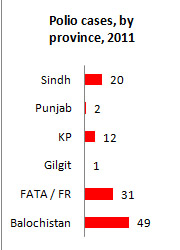
Pakistan is one of only four remaining Polio endemic countries; others include Afghanistan, India and Nigeria.

We are still fighting with it and unfortunately 49 cases from Balochistan and 31 cases from FATA and NA are recorded in 2011 which is higher than India, Nigeria and Afghanistan. Please cooperate with vaccination team and contribute to shining future of Pakistan.

To Our (Nation) Prosperity,

Faisal Javed Mir & First Aid to Save a Life Pakistan

Posted in Anti Polio Campaign, Emergencies and Social Media | Tagged , , , , , , , , , | Leave a comment

2-Days Accredited First Aid, CPR and AED Training Course

Welcome All,

First Aid to Save a Life (FATSAL) Pakistan is pleased to announce their first ever 2-Days training course on CPR, AED and First Aid.

First Aid to Save a Life Pakistan will commemorate World First Aid Week and to spread the power of knowledge and life saving skills has announced a especially discounted 2-days (internationally accredited) CPR, AED and First Aid certification course in the same price to course participants to learn, practice and demonstrate life saving skills to their satisfaction.

This course shall be conducted in Islamabad on September 29 & 30 from 0830 to 1500 hours. The course price is =15,000/- PKR per participant inclusive of course book, lunch, high tea and refreshments during the course.

For details and/or registration, contact, Mr. Mubin Khan on:

mubin@firstaidtosavealife.com or 0333 5103798

To Your Health, Safety and Prosperity,

Faisal Javed Mir & First Aid to Save a Life Pakistan

Posted in 1-Day Training Programs, Advanced First Aid, AEDs, CPR and AED, emergency care and first aid, Emergency First Aid, FATSAL Training Offers, First Aid, First Aid and CPR, First Aid CPR and AED, First aid for Families | Tagged , , , , , , , , , , , , , , , , , , , , , , , , , , , | Leave a comment

First Aid, CPR & AED Workshop

Welcome All,

First Aid to Save a Life (FATSAL) Pakistan is pleased to announce their upcoming workshop on “First Aid, CPR and AED” on May 5, 2012 at Railway Hospital, Rawalpindi. FATSAL in collaboration with Ronaq-e-Qainaat has planned this full day workshop.

Please see below for more details and registration.

To Your Health & Safety,

FATSAL & Ronaq-e-Qainaat

Posted in Workshops | Tagged , , , , , , , , , | Leave a comment

History of CPR – ABC to CAB

Respected All,

We published our first ever post on “History of CPR” back in May 2011. In that post we highlighted the contributions of Dr. James Elam and Dr. Peter Safar but today we will try out tiniest effort to unfold some of the historical facts about the modern days CPR and how it evolved.

CPR has origins dating back to 1700th century. It was started in year 1740 when, The Paris Academy of Sciences officially recommended mouth-to-mouth resuscitation for drowning victims. There are numerous honorable names who invested their lives to help the invention and forwarded the noble cause to coming generations. In 1960, a group of resuscitation pioneers, Dr Peter Safar, Dr. James Elam, and William Bennet, combines mouth-to-mouth breathing with chest compressions to create Cardiopulmonary Resuscitation, the lifesaving action we now call “CPR”.

Throughout the years, CPR has evolved from a technique performed almost exclusively by physicians and healthcare professionals. Today it’s a lifesaving skill that is simple enough for anyone to learn. However, research has shown that several factors prevent bystanders from taking action and fear of infection from performing mouth-to-mouth resuscitation.

In 2008 AHA first endorsed Hands-Only CPR – the two-step technique pushing hard and fast in the center of the chest until help arrives to overcome the fear of bystanders of being infected from mouth-to-mouth resuscitation.

Please find below the highlights of the History of Cardiopulmonary Resuscitation (CPR) from 1740 to date.

1740   The Paris Academy of Sciences officially recommended mouth-to-mouth resuscitation for drowning victims.

1767   The Society for the Recovery of Drowned Persons became the first organized effort to deal with sudden and unexpected death.

1891   Dr. Friedrich Maass performed the first equivocally documented chest compression in humans.

1903   Dr. George Crile reported the first successful use of external chest compressions in human resuscitation.

1904   The first American case of closed-chest cardiac massage was performed by Dr. George Crile.

1954   James Elam was the first to prove that expired air was sufficient to maintain adequate oxygenation.

1956   Dr. Peter Safar and Dr. James Elam invented mouth-to-mouth resuscitation.

1957   The United States military adopted the mouth-to-mouth resuscitation method  to revive unresponsive victims.

1960   Cardiopulmonary resuscitation (CPR) was developed. The American Heart Association (AHA) started a program to acquaint physicians with close-chest cardiac resuscitation and became the forerunner of CPR training for the general public.

1963   Cardiologist Leonard Scherlis started the American Heart Association’s CPR Committee, and the same year, the American Heart Association formally endorsed CPR.

1966   The National Research Council of the National Academy of Sciences convened an ad-hoc conference on cardiopulmonary resuscitation.  The conference was the direct result of requests from the American National Red Cross and other agencies to establish standardized training and performance standards for CPR.

1972   Leonard Cobb held the world’s first mass citizen training in CPR in Seattle, Washington called Medic 2.  He helped train over 100,000 people the first two years of the programs.

1981   A program to provide telephone instructions in CPR began in King County, Washington.  The program used emergency dispatchers to give instant directions while the fire department and EMT personnel were en route to the scene.  Dispatcher-assisted CPR  is now standard care for dispatcher centers throughout the United States and then followed by other countries.

Recommendations outlined in the 2010 AHA Guidelines for CPR & ECC continue to simplify CPR for rescuers, so that more people can and will act in the event of any emergency. More user friendly and convenient ways (like Hands-Only CPR) are developed to get CPR and first aid training into the hands of every person.

To Your Health, Safety and Prosperity,

Faisal Javed Mir & First Aid to Save a Life Pakistan

Did you like the post? Let’s get connected on FacebookLinkedInTwitter & YouTube.

You might also like:

Posted in Advanced First Aid, emergency care and first aid, Emergency First Aid, Project Diary, Why choose First Aid to Save a Life | Tagged , , , , , , , , , , , , , , , , , , , , , , , , , , , , , , , , , , , , , , , , , , , , , , , , , , , , , , , , , , , , , , , , , , , , , , , , , , , , , , , | 1 Comment

Snakebite Management Kit

Respected All,

In continuation to our series of posts on “Snakebite Management”, today we will share, what is called Snakebite Management Kit. Although the snakebite mortality numbers for Pakistan are over estimated, snakebite remains a significant problem of rural areas. Many snakebite sufferers are bitten by non-venomous snakes, and not all venomous snakebites cause envenomation. Therefore, it is very important to recognize the signs and symptoms of envenomation and to be well versed in optimal care.

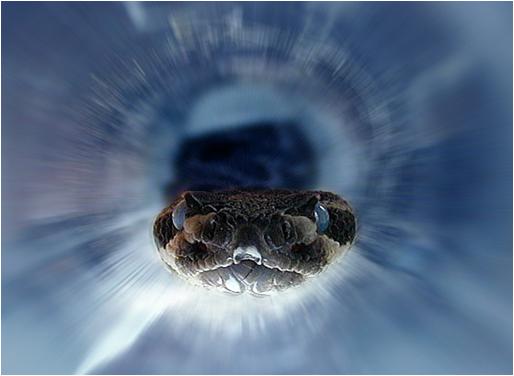
Neurotoxic snakes such as the cobra and krait (in Pakistan) present major challenges and are considered immediate danger to life. Their venom is fast acting and paralyses the respiratory system such that victims stop breathing and die of suffocation. The speed of action of the venom results in many doctors not being confident and equipped to treat such bites at (remote areas) site and most victims are referred to hospitals. This journey wastes precious time and many victims die during the journey due to lack of early diagnosis and/or administering first aid very late. Pakistan has a long history of snakebite cases BUT there are misconceptions concerning the level of snakebite mortality in Pakistan.

Snakebite Kit:

In order to effectively manage snakebite case a basic management kit and drug profile should be maintained at site. The kit should include:

1:- Anti Snake Venom (ASV): If the cold chain is adequate NIH liquid ASV is best, otherwise lyophilized Indian ASV should be kept in inventory.
2:- Adverse (cardiac) Reaction Drugs: Drugs to neutralize the affect on heart should be available in stock.
3:- Pain Medication: Paracetamol tablets are the preferred pain medication. Don’t give Aspirin.
4:- Resuscitation Bag: This is vital in dealing with neurotoxic bites. The bag should have provision to connect oxygen tubing with it.
5:- Airway Support Kit: The kit should also contain the improvised nasopharyngeal airway. If possible a laryngeal mask airway should also be available.

If snakebite sufferers receive immediate first aid and transferred as quickly as possible to (suitable) hospital having appropriate equipment and facilities, this will surely save his/her life.

To Your Health, Safety and Prosperity,

Faisal Javed Mir & First Aid to Save a Life Pakistan

Did you like the post? Let’s get connected on FacebookLinkedInTwitter & YouTube.

You might also like:

References:

1:- Successful Revival of Neurotoxic Snake Bite by Artificial Ventilation and Anticholinesterases by Akram Sheikh and Khurshid.

2:- Management of Vipride Snake Bite by Akram Sheikh and AK Ansari.

3:- Guidelines for Management of Snake Bite Cases by B Khan and Naseem A.

4:- Snake Bite Experiences at Pakistan Institute of Medical Sciences by Zafar J, Aziz S, Hamid B, Qayyum A, Alam MT, Qazi RA.

5:- Snake Bite in the Thar Desert by Suleman MM, Shahab MA, Rab MA.

6:- Snake Bite Treatment with Particular Reference to Neurotoxicity and the Ideal Hospital Snake Bite Kit by Naeem A Quraishi.

Posted in Advanced First Aid, emergency care and first aid, Emergency First Aid, Project Diary, Why choose First Aid to Save a Life | Tagged , , , , , , , , , , , , , , , , , , , , , , , , , , , , , , , , , , , , , , , , , , , , , , , , , , , , , , , , , , , , , , , , , , , , , , , , , , , , , , , , , , , , , , , , | Leave a comment