Summary of achievements of first 10 years of 21st century

As-Salam-o-Alaikum and very warm welcome to All,

Centers for Disease Control and Prevention released a list of achievements of the first 10 years of the 21st century. The 10 domestic public health achievements are published in CDC’s Morbidity and Mortality Weekly Report (MMWR). But here we will only put some highlights on; occupational safety, prevention and control of infectious diseases, tobacco control, cardiovascular disease prevention and improved public health preparedness and response only as these relates somehow to our scope of work as well.

One of the major findings in the report is that billions of dollars are saved in health care costs as a result of these achievements. Continued investments will save more. For example, preventing motor vehicle crashes could save $99 billion in medical and lost work costs annually.

Sooner we will publish some statistical data for year 2010 for Pakistan in our coming posts.

The summary of 5 topics is given below:

Occupational Safety: The significant improvements have been observed in working conditions and the risk of workplace-associated injuries during the past decade. Examples of these improvements include patient lifting guidance for health care workers that has reduced, by 35 percent, back injuries among these workers, a comprehensive childhood agricultural injury prevention initiative, which has resulted in a 56 percent decline in farm injury rates among young people, and reductions in deaths among crab fisherman from overturned fishing vessels as the result of a Coast Guard initiative to correct stability hazards.

Prevention and Control of Infectious Diseases: The first decade of the 21st century saw a 30 percent reduction in reported tuberculosis cases in the United States and a 58 percent decline in central line-associated bloodstream infections. A central line is a tube that a doctor usually places in a large vein of a patient’s neck or chest to give important medical treatment. When not put in correctly or kept clean, central lines can become a freeway for germs to enter the body and cause serious bloodstream infections. These infections can be deadly.

Other achievements included improvements in lab techniques and technology that made it easier to identify contaminated foods more rapidly and accurately to help control the spread of foodborne illness outbreaks. Broader HIV screening recommendations led to an increase in the number of people getting earlier HIV diagnosis, which provided them earlier access to live-saving treatment and care. The development of a blood donor test to screen for West Nile Virus has identified an estimated 3,000 potentially infected U.S. blood donations, removing them from the blood supply.

Tobacco Control: By 2010, FDA had banned flavored cigarettes, established restrictions on youth access to tobacco products, and proposed larger, more effective graphic warning labels. Smoking still results in an economic burden, including medical costs and lost productivity, of approximately $193 billion per year.

Cardiovascular Disease Prevention: Heart disease and stroke are still among the leading killers. However, deaths from both diseases have declined over the past decade, continuing a trend that began in the early 1900s for stroke and the 1960s for heart disease. These declines in deaths are mainly due to lower smoking rates as well as improvements in treatment, medications and quality of care, which has led to reductions in major risk factors for heart disease and stroke, such as uncontrolled high blood pressure and high cholesterol.

Improved Public Health Preparedness and Response: There has been much progress made since 2001 expanding the capacity of the public health system to respond to public health emergencies and disease outbreaks. The first decade of the 21st century also saw improvements in laboratory response for identifying and reporting disease outbreaks. In addition, influenza vaccination, along with other public health measures taken during the 2009 outbreak of H1N1, prevented an estimated 5–10 million cases, 30,000 hospitalizations, and 1,500 deaths.

Our training programs can help you in great deal to effectively manage and control more proactively above topics to make sure smooth run of your business. Our programs like, CPR, AED and First Aid, Bloodborne Pathogens, Emergency Response Planning, Substance Abuse, Occupational Health & Hygiene and many other trainings can help you save lot of money and add value to the health care system and reduction in sick leaves, day off, medical claims etc to allow you more productive time to have competitive advantage.

Stay connected with us to know about some of the stats relating to industrial accidents and injuries in Pakistan for year 2010 in our coming posts. You can subscribe to our blogs, so you don’t have to miss any post.

Thanks & Best Regards,

Faisal Javed Mir
Posted in Advanced First Aid, Basic First Aid, CPR and AED, First Aid, First Aid and CPR, First Aid CPR and AED, First Aid Training Programs, medicine information | Tagged , , , , , , , | Leave a comment

Web Statistics from April to May, 2011

As-Salam-o-Alaikum and very warm Welcome to all of you,

Today, I would like to share some statistical information of First Aid to Save a Life Pakistan’s website. In today’s post, I will give you summary of statistics from April 26, 2011 to May 26, 2011.

Visits: Our site was viewed 765 times during the mentioned period and 67 visits were made on any single day that was May 07, 2011. Maximum (257) hits were received by home page of our website which also led users to view our official page set up by MEDIC FIRST AID International Portal.

Our Medic FIRST AID trainings page received 87 hits.

Our Services pages received 35 hits and our newly launched “online store” received 33 hits in very short time after its proper update.

Search Engine Statistics: Our site appeared 18 times on search engine pages during this time.

Referrers: On 30 unique moments our site was referred by search engines for first aid training services during April 26 to May 26, 2011.

Subscribers: 4 online users subscribed to our news and blogs list.

Web Links Visits: 132 times online users opened our associated profiles and official training center page and links posted on our website.

At last, I would like to share with you the downloading stats.

MEDIC FIRST AID’s sample course book was downloaded 20 times and our course brochure for Basic CPR and First Aid for Adults was 17 times downloaded during April 26 to May 26, 2011.

We will also look forward to your comments if you faced any troubles with any particular page or still having some problems while browsing our website. We are doing our best to complete our online store page as early as possible and make it more users friendly as well.

Thanks & Best Regards,

Faisal Javed Mir
Posted in Web Stats | Tagged | Leave a comment

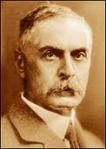
Do you know who was Karl Landsteiner?

As-Salam-o-Alaikum and very warm welcome to All,

In our earlier posts we talked about; history of CPR and Personal Safety & First Aid. In our today’s post we will tell who Mr. Karl Lendsteiner was.

Mr. Karl Landsteiner was an American biologist and physician who distinguished the blood into groups in 1901. He developed, the Rhesus factor, in 1937 along with Alexander S. Wiener. He also discovered polio virus, in 1909 with Erwin Popper. In 1930 he received the Nobel Prize in Physiology or Medicine.

In 1900 Mr. Karl Landsteiner found out that the blood of two people under contact agglutinates, and in 1901 he found that this effect was due to contact of blood with blood serum. As a result he succeeded in identifying the three blood groups, A, B and O, which he labeled C, of human blood. Mr. Karl Landsteiner also found out that blood transfusion between persons with the same blood group did not lead to the destruction of blood cells, whereas this occurred between persons of different blood groups. Based on his findings, 1907 the first successful blood transfusion was performed by Reuben Ottenberg at Mount Sinai Hospital in New York. Today it is well known that person with blood group AB can accept donations of other blood groups, and that persons with blood group O can donate to all other groups. Individual with blood group AB are referred to as universal recipients and those with blood group O are known as universal donors.

Thanks & Best Regards,

Faisal Javed Mir

Posted in medicine information | Tagged , , , , | 2 Comments

Personal Safety and First Aid

As-Salam-o-Alaikum and very warm welcome to All,

In our first post we briefly given the history of CPR. In our today’s post we will share with you what is most important and generally speaking first thing to be looked after before we do any help.

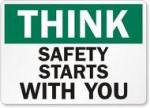
Your (responders) personal safety is the most important step in first aid scenarios. We have to remember that emergency scenes can be dangerous or there may be associated hazards. We may or may not be in position to highlight all the existing hazards where this incident occurred but we have to be careful to ourselves.

Put your future in good hands – your own.

We should make sure that emergency scene is safe for ourselves and there are no visible hazards present or developing situations exists, those may harm us. Once you are sure your personal safety is intact, you can anticipate rescuing the victim.

Don’t feel shame because this is not ethically wrong. You have every right but first to secure yourself, and then help with a cause to save victims’ life. If the scene is not safe, you should think about yourself. If you failed to think about your safety at first and jumped into the situation, then rescuers may have to recover two victims from scene instead of one.

All organizations like American Heart Association (AHA), European Resuscitation Council (ERC), Resuscitation Council UK (RCUK), British Heart Foundation (BHF), Australian Resuscitation Council (ARC), American Red Cross (ARC), Red Cross and others emphasizes the needs of personal safety in their published guidelines.

There we also have some supporting stories from all around the world to avoid secondary accidents. One of the American Road Traffic Safety organizations states that 32% of road accidents (in America) are listed in the category where injured were rescuers those rushed to save lives of others but put themselves in dangers. Here we cannot put our head in the sand and have to educate ourselves and made our students more and more conscious during training sessions about the priorities; rescuers safety is first priority.

Let me share one example with you where one road side accident (secondary accident) occurred, when an ambulance hit one pedestrian in LACHI; a small town; nearby Kohat city. An incident occurred at remote site area where qualified doctor was deployed, who decided to evacuate the patient to CMH Kohat. On their way to hospital they ambulance hit a pedestrian, an old man, and now the doctor gave him first aid to take him in the same ambulance to CMH Kohat. Just imagine what could have gone wrong which caused driver to adopt unsafe behavior and he hit a pedestrian. In this case, they lost time, they were in anxiety and wasted time on road side with bystanders (who could not understand the whole situation and involved in firefighting with the driver and doctor and started inquiries about the victim in ambulance), how could they have managed the 2nd patient in the ambulance (as generally in Pakistan ambulances can transport only one patient at one time), more stress after the secondary road side accident, medical expenses of second victim, communication expenses, local authorities inquiries, company wide road accident investigation and associated costs. You might recall the hidden cost of accidents iceberg to the above mentioned accident as well.

Generally in industry we only consider some of the cases very dangerous, for example; explosives environment, radioactive materials, toxic gases and other hazmats, and only have SOP in place to see if it is safe to enter the scene to rescue instead to have generalize approach.

“Accidents don’t have holidays”.

We should also have broader approach to cover all the misunderstandings those can harm you, if you missed your chance at first hand. And now when we have make sure the scene safety, we have to make sure we also have barriers against infectious body fluids and blood.

In the end, I just want to finish it that always use your common sense and never approach a scene that is not safe.

Thanks & Best Regards,

Faisal Javed Mir

Posted in Advanced First Aid, Basic First Aid, CPR and AED, First Aid, First Aid and CPR, First Aid CPR and AED, First Aid Training Programs | Tagged , , | 1 Comment

History of CPR

As-Salam-o-Alaikum and very warm Welcome to all,

First Aid to Save a Life Pakistan want to share their knowledge and experiences to contribute their part to society so that they can “Learn, Remember and Perform to Save Lives”. With this spirit in our heart and soul following the path to learn ourselves and share with others we would like to move forward to create awareness on First Aid, CPR and AED topics especially for occupational sites.

With this in our mind, we would like to start from some very inspirational real life stories, those who changed our lives, those who benefited whole mankind, those who done lot of good to humanity and we have saved lot of lives but have to do more to save more and more lives by spreading the knowledge and sharing our experiences.

In our today’s post we will list a brief history of CPR invention. We are bringing the details to our forum (courtesy to AHA) to make it public for our group members.

In 1954, Dr. James Elam proved that expired air was sufficient to maintain adequate oxygenation. He worked hard on it throughout and after two years jointly with Dr. Peter Safar, they invented mouth-to-mouth resuscitation in 1956.

Both worked together and discovered the airway, head tilt and chin lift techniques as well along with the mouth-to-mouth resuscitation.

In 1957, Dr. Peter Safar combined the A (Airway) and the B (Breathing) of CPR with the C (chest compressions), and wrote the book ABC of Resuscitation, which established the basis for mass training of CPR.

In 1960, Cardiopulmonary Resuscitation (CPR) was developed. The American Heart Association (AHA) started a program to acquaint physicians with close-chest cardiac resuscitation and became the forerunner of CPR training for the general public.

In 1973, AHA promulgated standards for this A-B-C system for CPR training for public domain.

This is how they invented A-B-C system to save lives.

Thanks & Best Regards,
Faisal Javed Mir

Posted in First Aid CPR and AED | Tagged , , , , , , , , , , , , , | 4 Comments

Blogging

First Aid to Save a Life! Pakistan had decided to stay closer to all their clients, students, followers, readers and those who take interest in our products and services. Henceforth, FATSAL has launched this blog to stay closer and share the in-depth knowledge and experiences with them.

Posted in Uncategorized | Leave a comment