How Your Heart Works – World Heart Day Campaign

Respected Readers and Our Dear Subscribers,

First Aid to Save a Life Pakistan welcomes you and will appreciate your positive participation in our World Heart Day campaign and forward this to other interested readers.

In our previous post we presented some statistics and facts released by World Health Organization (WHO) and in our today’s post we will shed light on how our heart works.

The structure of the heart:

Heart DiagramThe heart is made up of three layers:

  • Pericardium – thin outer protective sack
  • Myocardium – specialised cells making up the thick muscular wall
  • Endocardium – thin inner lining of the heart

Inside the heart there are four chambers – two on the left side and two on the right.

  • The two small upper chambers are called the atria
  • The two larger lower chambers are called the ventricles

The left and right sides of the heart are divided by a muscular wall called the septum.

There are four valves in your heart. They act like ‘gates’ that open and close, making sure that your blood travels in one direction through your heart – a bit like a one-way traffic system.

Like every other living tissue, the heart itself needs a continuous supply of fresh blood. This blood supply comes from the coronary arteries which branch off from the main artery (the aorta) as it leaves the left ventricle. The coronary arteries spread across the outside of the myocardium, supplying it with blood.

How blood travels around your body

As your heart muscle contracts, it pushes blood through your heart. With each contraction, or heartbeat:

  • Your heart pumps blood forward from its left side, through the aorta (the main artery leaving the heart) and into the arteries. Blood from the right side is pumped to your lungs.
  • The blood continues through the arteries, which divide off into smaller and smaller branches of microscopic capillaries. Travelling through this network of capillaries, blood reaches every part of your body.
  • The blood then travels back to the heart from the capillaries into the veins. The branches of the veins join to form larger veins, which deliver the blood back to the right side of your heart.

As the heart relaxes in between each heartbeat or contraction, blood from your veins fills the right side of your heart and blood from the lungs fills the left side of your heart.

The two sides of the heart are separate, but they work together. The right side of the heart receives dark, de-oxygenated blood which has circulated around your body. It pumps this to your lungs, where it picks up a fresh supply of oxygen and becomes bright red again.

The cardiovascular system

This movement of blood around the body, pumped by the heart, is called circulation. This system is called the cardiovascular system (or heart and circulatory system).

  • It contains about five litres (eight pints) of blood, which your heart is continuously circulating.
  • Each day, your heart beats about 100,000 times.
  • It pumps about 23,000 litres (5,000 gallons) of blood around your body.

For your heart to keep pumping regularly, it needs an electrical supply. This is provided by a special group of heart cells called the sinus node, which is also known as your heart’s natural pacemaker.

What if something goes wrong?

Some people are born with hearts that have not developed properly before birth  – this is called congenital heart disease. Some heart conditions may develop later in life, including coronary heart disease and atrial fibrillation. Sometimes you can inherit a heart condition from your family.

People who have coronary heart disease are at risk of having  a heart attack. Damage to the heart muscle because of a heart attack can lead to heart failure which will affect you for the rest of our life.

Heart Failure can also be caused by other conditions. How heart failure affects you will depend on the cause of the heart failure and how much of your heart muscle it affects.

In our last post we mentioned 4 major risk factors to cause heart diseases and eventually leading to highest ratios of fatalities among the other non-communicable diseases. Hence it is better to prevent heart diseases, otherwise you have to bear the pain for rest of your life and take medicines as well.

To Your Health and Safety,

Faisal Javed Mir
Posted in World Heart Day | Tagged , , , , , , , , , , , , , , , , , , | 1 Comment

World Heart Day

As-Salam-o-Alaikum Respected Readers,

Noncommunicable diseases (NCD) are the top cause of death worldwide, killing more than 36 million people in 2008, according to a new report released by the World Health Organization. Cardiovascular diseases were responsible for 48 percent of these deaths, cancers 21 percent, chronic respiratory diseases 12 percent, and diabetes 3 percent.

“This report indicates where each government needs to focus to prevent and treat the four major killers: cancer, heart disease and stroke, lung disease, and diabetes,” said Ala Alwan, M.D., assistant director-general for Noncommunicable Diseases and Mental Health at the World Health Organization.

The report, which provides data gathered from 193 countries, includes information on prevalence, trends in metabolic risk factors (cholesterol, blood pressure, body mass index, and blood sugar) alongside data on the country’s capacity to tackle the diseases.

In 2008, more than nine million of all deaths attributed to NCDs occurred before the age of 60; 90 percent of these “premature” deaths occurred in low- and middle-income countries. One of the findings shows that men and women in low-income countries are around three times more likely to die of NCDs before the age of 60 than in high-income countries.

They also indicate trends for four factors that increase people’s risk of developing these diseases: blood pressure, cholesterol, body mass index and blood sugar over the past 30 years.

Overall, the trends indicate that in many high-income countries, action to reduce blood pressure and cholesterol is having an impact, but there is a need to do more on body mass index and managing diabetes.

The profiles show what countries are doing to tackle noncommunicable diseases in terms of institutional capacity, specified funding, and actions to address the four main diseases and their associated risk factors.

The report also highlights what countries need to do to reduce people’s exposure to risk factors and improve services to prevent and treat noncommunicable diseases.

This report provides all countries with a baseline for monitoring epidemiological trends and assessing the progress they are making to address noncommunicable diseases.

Punjab Institute of Cardiology (PIC) is the full and functional members of World Heart Foundation and have plans to commemorate World Heart Day on September 29, 2011 to raise an awareness on healthy life style.

To Your Health and Safety,

Faisal Javed Mir
Posted in First Aid CPR and AED | Leave a comment

An Awareness Campaign on Dengue Prevention

As-Salam-o-Alaikum Respected Readers,

Dengue is the most widespread mosquito-borne infection which in recent years has become a major international public health concern. The magnitude of dengue problem has increased dramatically and has extended fears of an outbreak especially within Punjab and throughout the country.

First Aid to Save a Life Pakistan is a training and consultancy company and working within our scope to conduct dengue prevention awareness sessions to adopt better preventive measures to avoid becoming dengue virus carrier. We have decided to observe Dengue Awareness Week from Sep 19 to 24, 2011 and will answer the questions asked from us and share other information with them to feel confidence while fighting against this outbreak. We have created a new email address (dpp@firstaidtosavealife.com) where you can send your questions/queries to us.

Below is the link to an awareness campaign started by First Aid to Save a Life Pakistan for public interest and information to be shared with others as well.

Awareness Campaign

To Your Safety,

Faisal Javed Mir

Posted in Advanced First Aid, Basic First Aid, CPR and AED, Dengue Fever, emergency care and first aid, First Aid, First Aid Tips | Tagged , , , , , , , , , , , , , , | Leave a comment

What should be made primary requirement?

As-Salam-o-Alaikum Dear Readers,

In our today’s post we will highlight the importance of first aid to be taught at young age. Without wanting to sound pessimistic, it would seem we are not a nation particularly convinced with first aid knowledge and planning for precautionary measures. The Sindh, South Punjab and KPK is again hit with floods and our political system has already called UN for donations and rehabilitation services and funds.

There is no data available to say categorically how much of Pakistani adults know the basics of first aid and would feel confident enough to act in an emergency situation. This should be the grave concern for policy makers and disaster management authorities.

It should also be noted that some valuable efforts were made by National Disaster Management Authority (NDMA) in conducting seminars & workshops to raise an awareness among the communities, university students, and at some levels to schools as well. But we think this is not enough at the moment and there is a reason to hope that – with the right encouragement – future generations might turn out to be a little better equipped to deal with sudden disastrous situations.

New research shows that young children are able to learn and remember simple first aid and risk management skills that could make a crucial difference in an emergency. Henceforth, we should focus more often and rigorously to build this culture. That’s why First Aid to Save a Life recently launched a special school safety program.

This is the reason why First Aid to Save a Life (FATSAL) Pakistan think that first aid education to become part of the school curriculum. Almost every fifth of European country have already made first aid education compulsory in schools and Pakistan can take lead in Asia, if they do so. We need political will to make this happens and parents and teachers will also appreciate this initiative.

To Your Success and Safety,

Faisal Javed Mir

Posted in Advanced First Aid, Basic First Aid, CPR and AED, emergency care and first aid, First Aid, First Aid and CPR, First Aid CPR and AED, First Aid Tips, First Aid Training Programs, social life and first aid | Tagged , , , , , , , | Leave a comment

Use of Activated Charcoal in Poisoning

As-Salam-o-Alaikum Respected Readers,

Today we will share with you one of the many updates from G2010. Our today’s update is on “use of activated charcoal in poisoning”.

Today’s post will be a brief post in which we will also include what 2005 guidelines had to say about use of activated charcoal in poisoning. In the end we will see an updated 2010 guidelines on use of activated charcoal in poisoning and the rationale behind this update.

2005 Guidelines:

“There is insufficient evidence to recommend for or against the use of activated charcoal as first aid for ingestion.”

The summary of the change is that there is no evidence that activated charcoal is effective as a component of first aid. It may be safe to administer, but it has not been shown to be beneficial, and there are reports of it causing harm.

2010 Guidelines:

Don’t administer activated charcoal to a victim who has ingested a poisonous substances unless you are advised to do so by poison control center or emergency medical personnel.”

Henceforth, the 2010 guidelines has not shutdown the window of opportunity to use it but after seeking medical advise.

To Your Success & Safety,

Faisal Javed Mir

Posted in Advanced First Aid, Basic First Aid, CPR and AED, emergency care and first aid, First Aid, First Aid and CPR, First Aid Training Programs | Tagged , , , , | 1 Comment

Do you know what is Psychological First Aid?

As-Salam-o-Alaikum Respected Readers,

Today we will share with you one new topic which is Psychological First Aid (PFA). When terrible things happen in our communities, we want to reach out a helping hand to those who are affected. Although everyone is affected in some way by these events, there are a wide range of reactions and feelings each person can have. Psychological first aid has been recommended by many international and national expert groups. PFA should be offered to people in severe distress after being recently exposed to a traumatic event.

What is Psychological First Aid?

Psychological first aid (PFA) describes a humane, supportive response to a fellow human being who is suffering and who may need support. PFA involves the following themes:

  • providing practical care and support, which does not intrude;
  • assessing needs and concerns;
  • helping people to address basic needs;
  • listening to people, but not pressuring them to talk;
  • comforting people and helping them to feel calm;
  • helping people connect to information, services and social supports; &
  • protecting people from further harm.

PFA also involves factors that seem to be most helpful to people’s long-term recovery. PFA is for distressed people who have been recently exposed to a serious crisis event. You should not force help on people who do not want it, but make yourself easily available to those who may want support.

It is very important to act in ways that respect the safety, dignity and rights of the people you have decided to help. There is a lot to say on PFA and we will continue this service in better interest of our readers.

To Your Success,

Faisal Javed Mir

Posted in Advanced First Aid, Basic First Aid, First Aid Training Programs, Psychological First Aid | Tagged , , | Leave a comment

Why to avoid contact with blood?

As-Salam-o-Alaikum Respected Readers,

Today we will share with you why it is important to avoid direct contact with blood.

There is a potential for transmission of infection, if direct contact with blood has occurred. Although rare, injuries from an infected patient’s blood can transmit more than 20 diseases, including Hepatitis B, C and human immunodeficiency virus (HIV). Because of this transmission risk, a great care should be taken whenever you decide to administer first aid.

The main risk is exposure to infections, especially blood-borne viruses (BBV).

Transmission of infection depends on a number of factors, including the person’s natural immune system.  We know the number of injuries each year is high, and only a small number are known to have caused infections that become serious illnesses. The blood-borne viruses of most concern are:

  • Hepatitis B;
  • Hepatitis C; and
  • HIV.

As we don’t know at time of administering first aid at emergency scene so avoiding direct contact with blood is the most important personal safety tip. In many of the real life scenarios, you may not carry first aid kit with you but you can improvise the items available with you or get them from your surroundings to maintain your safety as well. These incidents are avoidable, and reducing them is primarily dependent on high quality education & training. And our this post will help you to learn the basics of blood-borne viruses infections.

If you suffer an injury from a sharp object or have had direct contact with blood which may be contaminated:

  • Encourage the wound to gently bleed, ideally holding it under running water;
  • Wash the wound using running water and plenty of soap;
  • Don’t scrub the wound whilst you are washing it;
  • Don’t suck the wound;
  • Dry the wound and cover it with a waterproof plaster or dressing;
  • Seek urgent medical advice (for example from your Occupational Health Service), as effective prophylaxis  (medicines to help fight infection) are available; &
  • Report the injury to your employer.

A significant proportion of blood-borne viruses infections occur when first aid providers fail to follow the standard personal protective procedures and dos and don’t told to them during their training sessions. These incidents are avoidable, and the above brief information can help you to take care of yourself from such worries.

Bloodborne Pathogens is an accredited training program which help students in managing disease exposure from materials that contain blood or other infectious body fluids. This course provides essential knowledge necessary to help reduce or eliminate the risk of bloodborne pathogens. This course is based on the latest guidelines released in October 2010.

To Your Safety & Success,

Faisal Javed Mir

Posted in Advanced First Aid, Basic First Aid, First Aid, First Aid Training Programs | Tagged , , , , , , , , , , | Leave a comment

World Humanitarian Day – Aug 19, 2011

As-Salam-o-Alaikum Respected Readers,

Today, August 19, is World Humanitarian Day. WHO and other international bodies are highlighting the roles performed by humanitarian workers, and remembering aid workers who have been killed or injured while performing their vital roles.

August 19 was declared as World Humanitarian Day by the UN General Assembly in 2008 to honour Sergio Vieira de Mello, a humanitarian worker. De Mello and 21 others had lost their lives during a bomb blast at a hotel in Baghdad in 2003.

Natural disasters, conflicts and other emergencies threaten the lives and health of millions of people every year. In the middle of such crises, thousands of dedicated humanitarian workers strive to care for those who have been affected and support local authorities to deliver assistance. There is never a year without humanitarian crises.  And wherever there are people in need, there are people who help them – men and women coming together to ease suffering and bring hope.

Pakistan is also facing one more natural disaster where thousands of people are stranded in the lower districts of Sindh, where rains have triggered devastating floods. We, Pakistanis, have to stand up and do our best to join hands with humanitarian workers and support (our cause) to help humanity.

To Our Prosperity & Strength,

Faisal Javed Mir

Posted in UN Annual Events, World Humanitarian Day | Tagged , , , , | Leave a comment

Worker Safety IS Social Sustainability

As-Salam-o-Alaikum Respected Readers,

Today we would like to throw light on corporate responsibility and social sustainability system. Many organizations act responsibly towards the people, their employees, and communities to contribute to social development in the areas where they live and work. They think that it is the essence of their commitment to their corporate social responsibility and they are very right but there are some organizations those doesn’t live up to the expectations even more fulfill their regulatory requirements. 

Basic life saving first aid skills is one of the subject one should consider is their responsibility to provide life saving skills to their employees and to contribute to communities where they live and work. In order to respond immediately and effectively to emergencies/disasters, which may occur during work timing or commuting to/from home to office and vice versa.

As most of the organizations collectively embrace the need to improve their impact on the society but the concept of sustainability is no longer just an investment in some of the occasional events, while I applaud increased efforts by number of organizations toward sustainable design and worker safety. There are some organizations those take responsibility of their services and products as well as invest in development of personal safety skills of their employees.

First Aid to Save a Life Pakistan’s community training programs are also one of the service where we share basic life saving first aid skills at large-scale and not for profit. At large-scale and especially at corporate sector, we should consider this and contribute/volunteer towards our community and society such program those can make difference in the lives of the families of our employees, communities and our fellow citizens.

First Aid to Save a Life Pakistan also share the same sense of responsibility and have developed community training programs and currently working on many more programs and school safety program and AED implementation program are part of those efforts. Despite the fact that many organizations neglect this aspect in their corporate social responsibility we will remain active in incorporating personal safety awareness and life saving skills, to truly protect the future, protecting the lives of workers and serve to community and our fellow citizens.

With this First Aid to Save a Life Pakistan also wishes our fellow citizens, a very happy Independence Day. Long Live Pakistan.


To Our Independence and Prosperity,

Faisal Javed Mir

Posted in Uncategorized | Tagged , , , , | Leave a comment

Sudden Cardiac Arrest (SCA) and Use of AED

As-Salam-o-Alaikum Respected Readers,

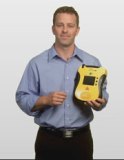
First of all we would like to inform you that we are authorized sale point (by local exclusive distributor for Pakistan) of Defibtech in Pakistan.

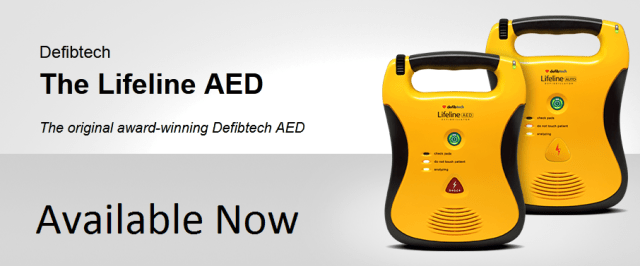
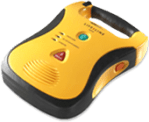
The Defibtech Lifeline® View AED is the first and only Automated External Defibrillator (AED) that shows you what to do in an emergency, using the full power and clarity of video in full-motion color. They say a picture is worth a thousand words; video is worth even more. It just got even easier to help save a life.

Mere seconds can mean the difference between life and death. Defibtech is an eye-catching AED (Automatic External Defibrillator) that can be located instantly. One that can be carried to the patient quickly without fumbling. One that can be used with minimal steps to analyze and treat the patient’s condition.

From the moment someone suffers sudden cardiac arrest the inspired design features of the Lifeline AED (Automatic External Defibrillator) save precious seconds off the defibrillation process. Seconds that save lives.

Without treatment, victims have only minutes to live. With quick response, this condition is readily treatable with survival rates well over 50%.

Unfortunately, most of the time, the necessary life-saving equipment does not arrive in time. As a result, typical survival rates are only 2%-5%.

Now there is something you can do to improve the odds dramatically for your customers and employees with a solution that is easy to use and inexpensive to buy. Automated External Defibrillators (AEDs) are life-saving solution.

Businesses not only provide services to countless customers, but also have to care for their employees. Given the number of people present and the considerable amount of time and activity spent at work, the risk of someone suffering cardiac arrest at your facility is very real. Durable, cost-effective, low-maintenance, and easy-to-use Defibtech AEDs are perfectly suited for the unique needs of the business environment.

The bottom line is that with a modest investment, now you too can save a life.

Key advantages of Defibtech AEDs:

  1. Simplicity and ease-of-use.
  2. Extremely cost-effective for tight budgets.
  3. Low life-cycle cost of ownership.
  4. Very low maintenance.
  5. Excellent dust and water protection.
  6. Long-life 5-year battery.
  7. Exceptional durability and reliability.
  8. Field-proven design.
  9. Durability for harsh environments and rapid deployment.
  10. Compact and self-contained to save much-needed space in a vehicle.
  11. Light and portable for easy transport in an emergency.
  12. Only defibrillation waveform with a Class IIa rating from the American Heart Association.
  13. With bright yellow and black coloring and attractive, sleek curves, the non-intimidating Defibtech AEDs (Automatic External Defibrillators) invite prominent display anywhere.
  14. The biphasic defibrillation we use is extremely effective at defibrillating patients in ventricular fibrillation – the most common form of Sudden Cardiac Arrest- on the first shock.
  15. At just about 4 pounds a child could carry them. Plus, Defibtech AEDs (Automatic External Defibrillators) meet US Military “drop and shock” specifications.

We at First Aid to Save a Life Pakistan not only sale this product, we do offer a complete AED program which consists of:

1- AED placement analysis and site survey;

2- Program Policies and Procedures;

3- Trainings Program;

3.1- Training Programs/Courses Available with FATSAL;

3.1.1- Accredited Training Programs;

3.1.1.1 BasicPlus CPR, AED and First Aid for Adults

3.1.1.2 CarePlus CPR & AED for Adults

3.1.1.3 CarePlus CPR & AED for Adults, Children & Infants

3.1.2- Non-Accredited Training Programs:

3.1.2.1 First Aid, CPR and AED for All

3.1.2.2 CPR and AED for All

3.1.2.3 CPR and AED for Adults Only

4- AED device installations;

5- Early Preparedness & Emergency Response (Check) Drills; &

6- Program Tracker.

Do visit our AED Implementation Program page for more details on this.

To Your Success,

Faisal Javed Mir

Posted in Advanced First Aid, Basic First Aid, CPR and AED, First Aid, First Aid and CPR, First Aid CPR and AED, First Aid Training Programs | Tagged , , , , , , , , | 2 Comments