Your Qustions and Our Answers

As-Salam-o-Alaikum Respected Readers & Subscribers,

First of all First Aid to Save a Life (FATSAL) Pakistan would like to thank subscribers, regular visitors, our valued clients, our associates and all silent well wishers. We thank them for their support, trust, their time, their comments/inputs and sincere feedback on our services and experienced team members. FATSAL Pakistan value your voice & comments and keeps doing this to own our continuous improvement commitment and to present you best services.

We receive many inquiries regarding our claim to provide accredited First Aid, CPR and AED training courses in Pakistan. Also number of persons and company representatives ask us about our course price and their first comment is why it is so high (we think it is not so high) as compare to courses offered by other training providers. We answered such questions in FAQs and now have decided to post it here so we can refer them to this post.

1:- At first let me tell you that majority of training providers are issuing their (local) certificates to successful participants and those certificates are not considered to fulfill the local legal requirements as such certifications should be accredited and I haven’t found any organization in Pakistan especially talking about first aid certifications.

Also do remember that having MBBS degree isn’t a criteria to issue first aid certificates as they are not authorized to do so. Only qualified instructors (for First Aid, CPR or AED) can do this and there should be certificate to validate his/her accreditation record for such authority.

Our instructor’s certificates are also valid for two years and we also have to go for re-certification which costs us heavily (as we have to travel abroad to get it). We don’t compromise on quality and internationally acceptability of certificates and this does not cost us high in longer run neither to you.

2:- In our accredited courses we do enroll only 12 participants (with one instructor) or 20 (one instructor and one assistant instructor) in one session. Can you tell us any other organization who does this? This is why our cost is high as compared to others but it is not too high.

3:- We charge =10,000/- PKR (as of 29 Oct, 2011 but also gives individual and group discounts) for one day accredited training course. Other training providers does charge (ranging from) 7000 to 14000 PKR and they issue local certificates not an accredited certificate. The certificate we issue is valid for two years. And some of the training providers issue certificates valid for one-year (some gives two-year validity) as well so your cost can be doubled as well. Do you still think that we charge you extra?

4:- Our certificate is internationally acceptable as our course content is based on the internationally recognized First Aid and ECC guidelines. It is not the case with other training providers in Pakistan. We have to get the updated guidelines at cost. This is why we charge you little extra and in reply gives you internationally acknowledged certificate. Don’t you think we have the right to do this?

5:- The difference between the quality and quantity of course notes. If you have done other first aid courses then you surely have notes book provided by them. I request you to download the sample course book posted in left frame of our website or click below link.

SAMPLE COURSE BOOK (also read notice of right)

Once you download it; see page by page and feel the difference (quality of notes). There are 65 pages in total to transform knowledge. We have imported these books from USA and have paid freight and taxes in USA and Pakistan to bring them here to educate our participants. Do you support us for charging little extra or still thinks it is too high?

6:- Another difference is between the quantity of manikins supAdult Manikinplied for training purposes. How many of training manikins you had when got first aid trainings? We provide 3 (only two are required) training manikins for class of 12 participants. Two of them are adult manikins and one is infant to practice CPR on all. So, 4 participants on one manikin as compared to 20 or 30 participants on 1 manikin (some training providers may have more than one manikins but I don’t know about them). Can you educate us if you have observed better facilities then this in any other first aid course?
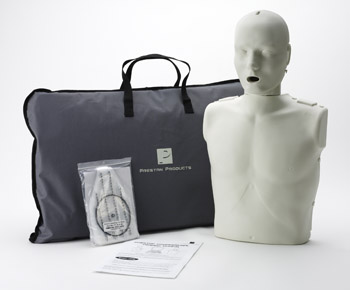
7:- The difference of associated training supplies. We also prefer that participants should use training supplies to learn the basic of emergency management and for this we do supply enough quantity of supplies like gloves, bandages, etc to gain the confidence and to enhance the skill retention. We do our best to maintain participants safety and have decontamination policy is place for this safety. Can you tell us any other training provider who thinks this way and have put in place procedures to avoid decontamination during trainings? Do we still have to justify why we have rates higher than other training providers?

8:- Significant classroom time for hands-on practice is another considerable difference. This course is normally finishes in 7 to 8 hours but when we have training hall booked for 12 hours we give 8 to 9 hours to attain 100% success rate.

9:- Please note that we can give course books to all enrolled participants but the successful completion of course certificate will be issued to successful participants only and not to all. And we have not faced yet a situation where we had to revoke certificate of any participants but to maintain our instructor’s and training center status we have to draw a line and we do observe it strictly.

10:- Generally, when training is conducted participants interact with instructor and then what happens after the completion of course? Nothing, participants take their certificates and training providers concentrate on new course booking. But in First Aid to Save a Life Pakistan, we do maintain contact with our students and continuously provide them updates in first aid and cpr techniques and other subjects to keep them updated so they don’t have to face a situation where they say that i forgot or don’t know about update. The updates will be delivered directly into their email account for 2-years time, the time of the validity of certification without additional cost. Can you name any training provider who does this? So can we charge little bit extra to maintain our this service?

11:- We also have authority to nominate first aiders who have administered first aid to save someones life to get recognition from the Samaritan authority of USA. I am sure nobody is doing this in Pakistan. Unfortunately I can’t name any Pakistani organization because no organization in Pakistan gives awards to first aiders.

12:- Despite the big differences stated above we also provide wallet card to quick reference or revision as the book is not pocket size.

13:- Please visit our policies page for your complete information. You might have not seen this before from any other training provider? We are here after a deep thought and doing our best to give you benefits and recognition to your certification not only in Pakistan but internationally.

14:- Our open courses are organized in hotels of good repute, quality of their service, facilities, meals and are easily approachable. So we take something from your and give it back to you in different way/style.

I am sure you will find above information helpful to decide and understand the difference between First Aid to Save a Life Pakistan and other training providers.

To Your Success, Comfort & Benefit,

Faisal Javed Mir & First Aid to Save a Life Pakistan

Posted in Advanced First Aid, Basic First Aid, CPR and AED, emergency care and first aid, First Aid, First Aid and CPR, First Aid CPR and AED, First aid for Families, First Aid Tips, First Aid Training Programs, social life and first aid | Tagged , , , , , , , , , , , , | 3 Comments

Myth about Dengue! Part3

As-Salam-o-Alaikum Respected Subscribers & Readers,

A lot has been said by medical experts on prevention/precautions of dengue fever: and local, provincial and national government also launched very heavy campaigns to control havoc/panic created by dengue fever. First Aid to Save a Life Pakistan would like to discuss some of the myths while discussing precautions and medications relating to dengue fever.

3:- Misguiding the nation and many less-educated people with irresponsible media campaign – If dengue doesn’t spread by specific breed of mosquito then what is aedes aegypti?

I got amazed when I read news reports like this (below given) from very senior medical officials. I don’t know why this is happening but what else I know is that citizens of Pakistan are receiving double meaning statements (might be caused by poor reporting) which is not helping them understand what dengue virus is and how it spreads. Do read below news article especially 4th last line to onward.

Where most of the government officials are portraying that dengue virus spreads when aegypti mosquito from aedes genus bites an infected person and transmits the virus to others with next bite. There are also three other mosquito breeds from aedes genus those can spread this virus but never named before. Aedes Albopictus is the other breed which has been identified by World Health Organization Pakistan as a vector who spread this virus. And some of the very senior medical executives saying that there is no specific mosquito who spreads dengue virus.

I just like to mention here an old quote which is very true in case of dengue fever.

Prevention is the best CURE.

To Your Health & Safety,

Faisal Javed Mir & First Aid to Save a Life Pakistan

Did you like the post? Let’s get connected on FacebookLinkedInTwitter & YouTube.

You might also like:

Posted in Dengue, Dengue Fever, social life and first aid | Tagged , , , , , , , , , | 3 Comments

Myth about Dengue! Part2

As-Salam-o-Alaikum Respected Subscribers & Readers,

A lot has been said by medical experts on prevention/precautions of dengue fever: and local, provincial and national government also launched very heavy campaigns to control havoc/panic created by dengue fever. First Aid to Save a Life Pakistan would like to discuss some of the myths while discussing precautions and medications relating to dengue fever.

2:- Misguiding the nation and many less-educated people with irresponsible media campaign – what are they distributing with name of prevention kits?

I don’t understand when I saw pictures likes this where CM is distributing dengue prevention kits. I heard lot of people asking about the contents of this prevention kit and were curious why these kits are not distributed in their areas as well. Many want to know from where they can get/purchase it as they thought it might be something special. They are less educated to understand the difference between curative and preventive kits.

I also don’t understand why not Dr. Saeed Illahi (Health Minister & Adviser to CM) is reviewing what has been posted and associated with CM or provincial government on subject on dengue and to correct if any sort of wrong message has been given.

Remember, there is no preventive medicines available for dengue as there are against Malaria. There are no curative kits available against dengue as these are available against Malaria. Kindly don’t confuse yourself with above picture.

To Your Health & Safety,

Faisal Javed Mir & First Aid to Save a Life Pakistan

Did you like the post? Let’s get connected on FacebookLinkedInTwitter & YouTube.

You might also like:

Posted in Dengue, Dengue Fever, emergency care and first aid, social life and first aid | Tagged , , , , , , , , , , , , , , , , , | Leave a comment

Incorrect, doubtful and/or wrong concepts about Dengue!

As-Salam-o-Alaikum Respected Subscribers & Readers,

There is a lot said by medical experts on prevention/precautions of dengue fever: and local, provincial and national government also launched very heavy campaigns to control havoc/panic created by dengue fever. First Aid to Save a Life Pakistan would like to discuss some of the misconceptions while discussing precautions and medications relating to dengue fever.

1:- Lethal advice – Stop use of Aspirin:

It is advised by local government and even by the other national medical organizations that dengue fever patients should stop use of Aspirin. On the other hand the national level cardiologists and most prominent names of Punjab Institute of Cardiology, Lahore, Senior Professor Nadeem Hayat Malik (who is also Elected President of Pakistan Cardiac Society) publicly denied this advice (in his public address on September 25, 2011 in PC Lahore while commemorating World Heart Day Campaign organized by Jang Group) and suggested the patients those are suffering with cardiovascular diseases and have dengue fever that they should first consult with their cardiologists and take appropriate actions as advised by them and should not stop the medicines (like aspirin) on their own. He further emphasized that stopping use of these medicines without consultation with their cardiologists can be far more lethal and cause adverse effects on their health as compared to dengue fever.

He also presented some facts about severity of cardiovascular diseases in Pakistan and claimed that approximately more than 1000 deaths results in Pakistan due to cardiovascular diseases.

In this seminar other experts were also present who didn’t denied the public statement made by Professor Nadeem Hayat Malik. Some of the prominent names are Dr. Ambar Malik (Senior doctor of Sheikh Zayed Hospital) & Dr. Shahid Amin (Senior Doctor of PIC).

He again publicly addressed on September 29, 2011 in Punjab Institute of Cardiology Auditorium, on day of World Heart Day proceedings in Punjab Institute of Cardiology and again emphasized his concerns. A full panel of experts were also present there including the Head of Institute (Professor Dr. Azhar) along with the other experts like Dr. Amber Malik (Sr. Dr. of Sheikh Zayed Hospital), Dr. Shahid Amin (Sr. Dr. of PIC), Dr. Saqib Shafi (Sr. Dr. of PIC) and Medical Superintendent of PIC Lahore.

He further explained the complications and precautions in use of medicines especially aspirin or other nonsteroidal anti-inflammatory drugs (NSAIDs) prescribed by cardiologists to cardiovascular disease patients. He added that sudden stoppage of these medicines can cause serious damages and these medicines can be stopped as advised by cardiologists. He included that these medicines can only be stopped if the platelet count reaches 50,000 range and the prescribed medicines can be cut to half if it reaches between 90,000. The patients are not advised to suddenly stop their medicines and must consult with their local cardiologists whom they visit for regular checkup or any institute.

There is not only one which is mentioned above, unfortunately there more than one.

To Your Health & Safety,

Faisal Javed Mir

Did you like the post? Let’s get connected on FacebookLinkedInTwitter & YouTube.

You might also like:

Posted in Dengue, Dengue Fever, social life and first aid | Tagged , , , , , , , , , , , , , , , | 1 Comment

Online Basic First Aid Course

As-Salam-o-Alaikum Respected Readers,

Too busy to attend a first aid course? Not a problem – now you can learn all the key life-saving skills without leaving the comfort of your own home or office. First Aid to Save a Life Pakistan is offering first time ever in Pakistan an accredited basic first aid training courses online (blended training programs).

By launching our online basic first aid courses we are bringing our accredited basic first aid training courses directly to you for your ease. We know that lack of time and costs are the key reasons to not attend a classroom first aid course. Our this approach assures simplest ever way to learn basic life-saving skills. You can use it how, when and where you like, and learn as little or as much as you want with each session. And those who would like a little more instruction can ask for instructor assistant at time of enrollment.

Cost-Effective

  • Reduce total costs associated with training. Much of the training can be completed outside of the traditional classroom.

Convenient

  • Blended Training offers an easier process for employees; students can train and prepare at times that are convenient for them.

Consistent

  • Both Knowledge and Skills Objectives are met through the Blended Learning solution. Information presented online is the same material for all students ensuring that they are adequately prepared as a group to meet skill objectives. Certification is received after knowledge and skill objectives are reviewed by an Instructor. 

Automated

  • Student and Instructors can automatically receive email notification regarding enrollment, follow-up, and completion associated with the training program.

Easy to Use

  • Self-directed, active experience that appeals to the adult student.

Our this service will be helpful for parents as well. New research by Tesco Baby & Toddler Club reveals that 72% of parents wouldn’t feel confident in administering first aid. 60% would worry they would do something wrong, 54% would panic and 47% fear they would cause more harm. Hence our this course will obviously help parents to learn basic first aid to keep their family members safe (while staying close to their young family members and learning) when there is an emergency.

Visit our website for details of different training programs available online.

https://firstaidtosavealife.com/medic-first-aid%C2%AE/

To Your Safety,

Faisal Javed Mir

Posted in Advanced First Aid, Basic First Aid, CPR and AED, emergency care and first aid, First Aid, First Aid and CPR, First Aid CPR and AED, First aid for Families, First Aid Tips, First Aid Training Programs, Psychological First Aid, social life and first aid | Tagged , , , , , , , , , | 1 Comment

Life Saving Skills – World Heart Day Campaign

Welcome All – Our Respected Readers and Subscribers,

Life Saving Skills is our last post on subject of World Heart Day Campaign. First Aid to Save a Life Pakistan started this campaign from September 25, 2011 and posted their first blog with name of World Heart Day and posted two other special posts on Sep 29 (Save Million Hearts) and Oct 02 (How to live healthy life) 2011.

By knowing the signs of cardiac arrest and heart attacks you can ring the emergency services (1122 in Punjab & KPK and others like Edhi and local EMS) as early as possible and help to reduce the amount of time it takes before someone gets professional treatment. You can also learn emergency life supporting skills (also called Basic Life Supporting; BLS; Skills) through certified and good reputation training resources available from local (Pakistani) market.

What you can do to save a life?

Knowing what to do when someone has a cardiac arrest is important. If you can do CPR you can buy the time needed for professional help to arrive and save the life of your loved one. Being able to do CPR more than doubles their chance of survival. Cardiopulmonary Resuscitation (CPR) and use of Automated External Defibrillator (AED) are life saving skills.

A defibrillator is a life-saving machine that gives the heart an electric shock in some cases of cardiac arrest. This is called defibrillation and can save lives.

Cardiac arrest is when the heart stops pumping blood around the body. When someone has a cardiac arrest, defibrillation needs to be prompt and until such time you can perform CPR to gain time.

Here’s a real-life video showing the aftermath of a road accident, where an unconscious biker has ended up beneath a burning car.

What happens or what did you observed? They all, every one of them, immediately retreat and leave the casualty lying prone on the road after recovering him underneath the burning car. Granted, there is a burning car nearby and the policeman does gesture for them to move away. But think of how determined they all were to get him from under the car just seconds earlier, and how willingly they all now fall away and left him near to associated hazards.

The reason why this happened is easy to explain – it’s called the bystander effect. In a nutshell, pulling someone from under a car is dangerous and needs bravery, but otherwise it’s a pretty straightforward ask. Anyone can do it. However, most people are deeply uncomfortable with first aid and, especially when there’s a group present, people generally decide that it’s someone else’s job to step in and help.

In such a situation, all someone needed to do was roll the guy on to his side and lift his chin: technically known as the recovery position. That would ensure that, even if the casualty was unconscious, he’d still be able to breathe. Although he was saved and recovering in hospital as told by his uncle. In such cases you might have to deal with psychological first aid skills or got to control with emotional affects of accident.

Therefore, we suggest you to learn basics of first aid skills those will benefit you, your family, relatives (while celebrating religious,  national or family occasions), neighbors, colleagues, office staff and public. Also, do remember your numbers (cholesterol, blood sugar, blood pressure and body mass index) to live healthy life.

To Your Health & Safety,

Faisal Javed Mir

Posted in World Heart Day | Tagged , , , , , , , , | 5 Comments

Healthcare & Medical Education Expo 2011

Welcome All – Our Subscribers and Respected Readers,

Healthcare and Medical Education Expo 2011 is a two day exhibition with conferences which will be held on October 8-9th, 2011, at Lahore Expo Center.

The Healthcare & Medical education EXPO 2011 will provide a unique platform for Hospitals, Medical Colleges, Healthcare Leader, Pharmaceutical Companies, Equipment manufacturers, wholesalers, distributors to meet healthcare industry service providers, consumers, public and private sector decision makers.

Along with the exhibition visitors can also participate in conferences. There are comprehensive, multi-track conferences providing a diverse range of subject topics relating to healthcare in Pakistan. The conferences will have innovative and mutually beneficial programs for all healthcare professionals, attracting a wide cross-section of the medical community ranging from front-line medical staff through to senior-level management, heads of hospitals and Health ministry officials. It will be a unique experience for healthcare professionals to learn, educate, network and focus on issues that are important and relevant to them. Following conferences will be held;

  1. Management and leadership in Healthcare;

  2. NGO’s Healthcare delivery in developing countries;

  3. Family Medicine – Essential Service;

  4. Gynae & OBS – Modern Trends;

  5. Medical education – Under graduate and Post graduate students/faculty  selection and training;

  6. Pharmaceutical Industry – Potential and Growth of International and local companies in Pakistan;

  7. Medical equipment – (Procurement Process, Manufacturing vs Import , SSS);

  8. Private and Public Hospitals – Challenges and Comparison of services – quality vs cost; &

  9. Lab & Radiology Services – Present & Future of Diagnostic Services.

For more details click here to visit the main website.

To Your Health & Safety

Faisal Javed Mir

Posted in Healthcare and Medical Expo, Industrial News, social life and first aid | Tagged , , , | Leave a comment

How you can live a healthy life

As-Salam-o-Alaikum Respected Readers and Dear Subscribers,

This is the third and final post of our World Heart Day (Week) Campaign which we started from September 25, 2011. I would like to mention two of the very common and known quotes to share with you to start this post and will share how important it is in our today’s lifestyle to emphasize or reconsider these quotes of very old times.

“Health is Wealth.” 

&

“Prevention is better than CURE.”

It is very true because if we are not healthy, we cannot do any work with full energy and enthusiasm which in turn affects badly our wealth creation. So to live a healthy life style, we need to improve our lifestyle.

Here are given some of the tips to enjoy healthier life.

1. Healthy food intake – Eat fruit and vegetables and avoid saturated fat. Beware of processed foods, which often contain high levels of salt.

2. Get active & take heart – Even 30 minutes of activity can help to prevent heart attacks and strokes and your work will benefit too.

3. Say no to tobacco – Your risk of coronary heart disease will be halved within a year and will return to a normal level over time.

4. Maintain a healthy weight – Weight loss, especially together with lowered salt intake, leads to lower blood pressure. High blood pressure is the number one risk factor for stroke and a major factor for approximately half of all heart disease and stroke.

5. Know your numbers – Visit a healthcare professional who can measure your blood pressure, cholesterol and glucose levels, together with waist-to-hip ratio and body mass index (bmi). Once you know your overall risk, you can develop a specific plan of action to improve your heart health.

6. Insist on a smoke-free environment – Demand a tobacco ban – ensure your workplace is 100% smoke-free. Support the adoption of smoking – cessation services encourage your employer to provide help to those wanting to quit tobacco.

7. Bring exercise to the workplace – Include physical activity in your working schedule – cycle to work if this is possible, take the stairs, exercise or go for a walk during your lunch breaks, and encourage others to do so too.

8. Choose healthy food options – Ask for healthy food at your work canteen, or find nearby cafes or restaurants that serve healthy meals

9. Encourage stress-free moments – Whilst stress has not been shown to be a direct risk fact or for heart disease and stroke, it is related to smoking and unhealthy eating, which are risk factors for heart disease.

The above will surely help you to learn how to keep yourself healthy and active and better control over your key numbers.

To Your Health & Safety,

Faisal Javed Mir

Posted in First Aid CPR and AED | Tagged , , , , , , , , , , , , , , , , , , , , , | Leave a comment

Save Million Hearts

As-Salam-o-Alaikum Respected Readers,

Today is September 29 and all of the world is celebrating World Heart Day. All key heart institutes of Pakistan are celebrating this occasion today and First Aid to Save a Life Pakistan is also celebrating this day and have declared this week as World Heart Week and will continue their this community service for public awareness.

This is special post of the week and the only reason is to discuss Million Hearts Campaign on World Heart Day. Million Hearts is an initiative (by USA government and not by Pakistan) to prevent 1 million heart attacks and strokes over the next five years. We can have this sort of campaign in Pakistan but need resources, planning, vision, commitment and support from government, private sector, professionals and civil society to have one such result oriented campaign and we are hopeful that one day we shall be celebrating a very own national level campaign to prevent heart diseases.

Noncommunicable diseases (NCD) are the top cause of death worldwide, killing more than 36 million people in 2008, according to a new report released by the World Health Organization. Cardiovascular diseases were responsible for 48 percent of these deaths, cancers 21 percent, chronic respiratory diseases 12 percent, and diabetes 3 percent.

We can also achieve this goal by encouraging healthy lifestyle choices and also increasing aspirin use among people at risk, blood pressure and cholesterol control, and smoking cessation.

Million Hearts aims to improve heart disease and stroke prevention by:

  • Improving access to effective care.
  • Improving the quality of care.
  • Focusing more clinical attention on heart attack and stroke prevention.
  • Increasing public awareness of how to lead a heart-healthy lifestyle.
  • Increasing the consistent use of high blood pressure and cholesterol medications.

We’re all at risk for heart disease and stroke. People of all ages, genders, races, and ethnicities are affected. Many of the people who are at high risk for heart attack or stroke don’t know it. Talking to your doctor about your heart health and getting your blood pressure and cholesterol checked are important first steps to reduce your risk. Many other lifestyle choices—including eating healthy, exercising regularly, and following your doctor’s instructions about your medications can all help protect your heart.

Preventing 1 million heart attacks and strokes in the next five years will require the work and commitment to change from all of us. There are steps that each of us can take to reach this goal as a nation. Be one in a Million Hearts and see how your actions can make a positive difference. A Million Hearts begins with you.

What Individuals can do?

PREVENT heart disease and stroke in your family by UNDERSTANDING the risks.

GET UP and GET ACTIVE by exercising for 30 minutes on most days of the week.

KNOW your ABCS:

  • Appropriate Aspirin Therapy
  • Blood Pressure Control
  • Cholesterol Control
  • Smoking Cessation

STAY STRONG by eating a heart-healthy diet that is high in fresh fruits and vegetables and low in sodium, saturated and trans fats, and cholesterol.

TAKE CONTROL of your heart health by following your doctor’s instructions for medications and treatment.

What employers can do?

EMPOWER your community by supporting activities that help people access high-quality health care, manage their conditions effectively, get active, eat healthy, and stay smoke-free.

INCREASE awareness of heart disease and stroke and their risk factors to empower your employees to take control of their heart health.

IMPLEMENT smoke-free air policies at worksites to help smokers quit and keep nonsmokers tobacco-free.

SUPPORT efforts to reduce sodium and eliminate trans fats in the food supply, including food served or available at worksites.

To Your Health and Safety,

Faisal Javed Mir

Posted in Advanced First Aid, Basic First Aid, CPR and AED, Dengue Fever, emergency care and first aid, First Aid, First Aid and CPR, First Aid CPR and AED, First aid for Families, First Aid Tips, First Aid Training Programs, UN Annual Events | Tagged , , , , , , , , , , , | 1 Comment

Are you satisfied with the efforts made by local (city) government to control Dengue?

Posted in Dengue | Tagged , , , , , , , , | Leave a comment