
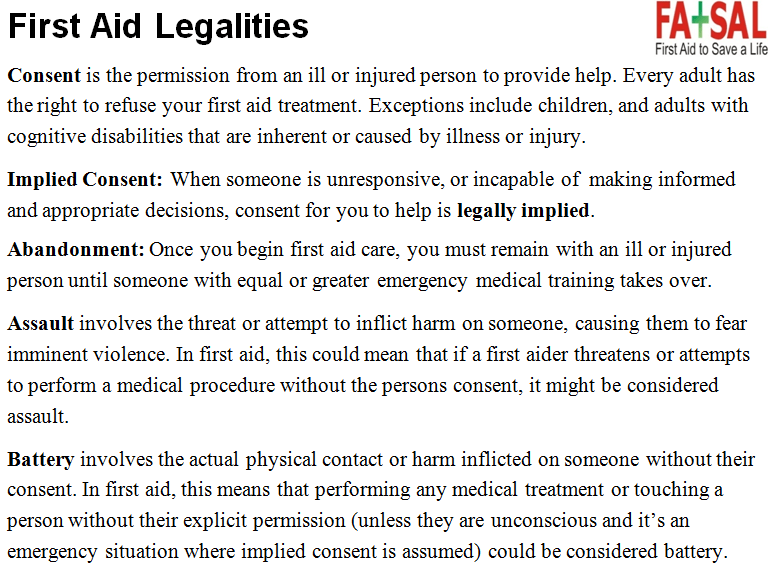
Understanding the legalities surrounding first aid is crucial for anyone providing assistance in emergencies. Consent is a fundamental concept; you must obtain explicit permission from a conscious individual before administering first aid. If the person is unconscious or unable to give consent, implied consent is typically assumed, especially in life-threatening situations. However, it’s important to act within the scope of your training and avoid any actions that could be deemed as battery or assault. Battery involves unauthorized physical contact, while assault refers to threatening or attempting to cause harm. Providing first aid should always be done with the intent to help and in accordance with established procedures. Familiarizing yourself with local laws and regulations regarding first aid can protect you legally and ensure that your actions are both effective and respectful of the individual’s rights.
 First Aid BLS & Emergency Management Solutions
